Audio enhancement and mastering are crucial stages in the music production process. While recording captures the raw performance, enhancement and mastering refine these recordings into polished, professional-grade tracks. Without these processes, even the best performances can sound amateurish or unbalanced. Audio enhancement software is designed to improve the quality of the vocal and instrumental recordings, removing unwanted noise and balancing frequencies. This step ensures that each element of a track is heard clearly and harmoniously.
Conversely, mastering software is used to prepare the final mix for distribution, ensuring consistency across various playback devices. It involves fine-tuning the overall sound, adjusting levels, and applying final effects to give the music a cohesive and polished sound. Mastering is often considered an art form in itself, as it can significantly alter the emotional impact and commercial viability of a track. By emphasizing certain frequencies and dynamics, mastering can make a song sound great whether it’s played on high-end speakers or simple earbuds.
Vocal performance is often the focal point of a track, and achieving clarity and presence is paramount. Audio enhancement software is equipped with tools to clean up vocal tracks, apply effects, and optimize sound quality. This not only enhances the listening experience but also ensures that the artist’s message and emotional intent are conveyed effectively.
iZotope Nectar 3
iZotope’s Nectar 3 is a comprehensive vocal processing suite, offering a range of features designed to enhance vocal tracks. Its Vocal Assistant feature analyzes your vocal and automatically applies corrective adjustments, including EQ, compression, and de-essing. This intelligent processing saves time and ensures that your vocals are always in the best shape. The software also includes a pitch correction module and creative effects like reverb and delay, making it a versatile option for vocal enhancement. These features allow producers to experiment with different vocal textures and effects, enabling creativity and innovation in music production.
Waves Tune Real-Time
Waves Tune Real-Time is another excellent choice for vocal enhancement. Known for its pitch correction capabilities, it provides real-time processing with low latency, making it ideal for live performances. This feature is especially valuable for artists who need to maintain vocal integrity during dynamic stage performances. The software allows fine-tuning of pitch correction parameters, ensuring natural-sounding vocals. Additionally, it integrates seamlessly with digital audio workstations (DAWs), providing flexibility in various production environments. This integration ensures a smooth workflow, allowing producers to focus more on creativity rather than technical issues.
Mastering Software: Perfecting the Final Mix
Mastering is the final step in music production and involves fine-tuning the mixed audio to achieve a professional sound. Sound mastering software is designed to enhance the sonic characteristics of a track, ensuring it translates well across different playback systems. This step is crucial for maintaining the artistic intent of a track while making it commercially viable.
Ozone 9 by iZotope
Ozone 9 is a powerhouse in the mastering realm. This software offers a suite of mastering tools, including EQ, dynamics, imaging, and maximization. Its Master Assistant feature uses AI to analyze your track and suggest a starting point for your mastering chain. This automated assistance is invaluable for both beginners and seasoned engineers looking to streamline their workflow. Ozone 9 also includes Tonal Balance Control, allowing producers to visualize and adjust the tonal balance of their tracks to match target references. This feature ensures that the final product maintains a professional sound across various listening environments.
FabFilter Pro-L 2
FabFilter Pro-L 2 is a highly-regarded limiter used in the mastering process. Its transparent sound and intuitive interface make it a favorite among audio engineers. The software is designed to preserve the dynamics and emotional impact of a track while achieving the desired loudness. Pro-L 2 offers precise control over loudness and dynamics, with features like true peak limiting and advanced dithering options. This ensures that your final mix reaches optimal loudness without compromising audio quality. The software’s versatility and precision make it an essential tool for achieving a polished and professional sound.
Sound Mastering Software: Bridging the Gap Between Home and Professional Studios
Sound mastering software has leveled the playing field, enabling home studio producers to achieve professional results. These tools offer a range of features that cater to both novice and experienced users, providing the flexibility to tailor the mastering process to individual needs. This accessibility has empowered independent artists and small studios to compete with larger, professional facilities.
Steinberg WaveLab Pro
Steinberg’s WaveLab Pro is a comprehensive mastering suite, offering a plethora of tools for audio analysis, editing, and mastering. Its advanced metering options provide detailed insight into the audio spectrum, helping engineers make informed decisions during the mastering process. This detailed analysis capability ensures that every element of a track is optimized for clarity and impact. WaveLab Pro also includes a range of restoration tools, making it suitable for both music and post-production applications. This versatility allows producers to address a wide variety of audio challenges, from music mastering to podcast production.
T-RackS 5 by IK Multimedia
T-RackS 5 is a modular mastering suite that combines ease of use with professional-grade processing. It features a collection of high-quality modules, including EQs, compressors, and limiters, all of which can be arranged in a flexible signal chain. This modular approach allows producers to tailor their mastering chain to the specific needs of each project. The software’s loudness metering capabilities ensure that your final mix meets industry standards, while its comprehensive library of presets offers a quick starting point for various mastering scenarios. These presets provide a valuable resource for both novice and experienced users, offering a solid foundation for mastering.
Choosing the Right Software for Your Needs
by Ryan Klaus (https://unsplash.com/@ryankphoto)
Selecting the right vocal and mastering software depends on various factors, including budget, experience level, and specific audio processing needs. While professional-grade software offers extensive features and flexibility, they often come with a steeper learning curve and price tag. Conversely, more affordable options may sacrifice some advanced functionalities but provide an easier entry point for beginners. Understanding these trade-offs is essential to make a choice that aligns with your production goals.
Budget Considerations
When considering audio enhancement and mastering software, it’s essential to evaluate your budget. High-end software like iZotope Ozone 9 and Steinberg WaveLab Pro offer comprehensive features but can be a significant investment. For those with limited budgets, exploring subscription models or educational discounts can make these tools more accessible. On the other hand, affordable options like Waves Tune Real-Time provide essential functionalities at a lower cost, making them ideal for beginners or those with limited processing needs.
User Experience and Learning Curve
The complexity of software interfaces can vary significantly. While some programs offer user-friendly interfaces with intuitive controls, others might require a more in-depth understanding of audio processing. Beginners may benefit from software with straightforward interfaces and preset options, which allow them to achieve satisfactory results without extensive technical knowledge. In contrast, experienced users might prefer programs offering greater customization and control, allowing them to experiment and fine-tune their tracks to perfection.
Integration with Existing Tools
Ensure that your chosen software integrates well with your current digital audio workstation and workflow. Compatibility with your DAW and other plugins can streamline the production process and enhance overall efficiency. This integration is crucial for maintaining a smooth and productive workflow, allowing you to focus on creativity rather than technical issues. Before purchasing, verify the software’s compatibility with your existing setup to avoid potential conflicts or limitations.
Final Thoughts
In the realm of music production, vocal and mastering software play a pivotal role in transforming raw recordings into polished, professional tracks. Whether you are an aspiring musician or a seasoned audio engineer, investing in the right audio enhancement and mastering tools is crucial to achieving your desired sound quality. By understanding the capabilities and limitations of each software, you can make informed decisions and elevate your music production to new heights. Taking the time to explore and learn these tools will not only enhance your production skills but also expand your creative possibilities, allowing you to produce music that resonates with your audience.
Choosing the right vocal recording microphone is crucial for achieving professional sound quality. Whether you’re a musician, vocalist, or sound engineer, the right microphone can make all the difference.
Microphones capture the nuances of your voice, bringing your recordings to life. But with so many options, finding the best vocal microphones for recording can be overwhelming.
This guide will help you navigate the world of recording studio microphones. We’ll explore the top 5 vocal recording microphones available today.
Each microphone has unique features, pros, and cons. Understanding these can help you make an informed decision.
We’ll discuss the differences between condenser and dynamic microphones. These types have distinct characteristics that affect vocal recording.
Microphone polar patterns and frequency response are also key factors. They influence how a microphone captures sound.
Price and value for money are important considerations. We’ll provide insights into what you can expect at different price points.
User reviews and expert opinions will guide you further. These insights can help you choose the best vocal mics for your needs.
Finally, we’ll offer tips for setting up your home studio. With the right microphone, your recordings can reach new heights.
Why the Right Vocal Microphone Matters
The right vocal microphone captures the essence of your voice. It enhances clarity and detail, providing a professional touch to recordings.
Not all microphones suit every voice. Choosing wisely affects the quality and character of your recordings.
Vocal microphones vary in how they pick up sound. They focus on different frequencies and details, influencing the final output.
Selecting a microphone suited to your vocal style is critical. It ensures that your unique vocal attributes are highlighted.
The right microphone can prevent common recording issues, such as feedback or distortion. It helps deliver a clean, clear sound.
Consider how different microphones react to proximity and loudness. The microphone’s build quality also impacts its performance in various environments.
Here are some reasons why the right microphone matters:
Vocal Characteristics: Highlights unique traits of your voice.
Adaptability: Functions well in different environments and styles.
Durability: Withstands regular use without loss of quality.
Investing in a quality microphone pays off in the long run. It enhances not just your recordings but also your overall recording experience.
Remember, a suitable microphone elevates the natural beauty of your voice. Choose wisely to make your recordings stand out.
Key Features to Consider When Choosing a Vocal Recording Microphone
Understanding key features of vocal recording microphones helps in making informed choices. These features directly influence sound quality and performance.
Polar patterns determine how a microphone picks up sound from different angles. Choose based on your recording environment and needs.
Frequency response is another crucial factor. It defines how well a microphone captures various sound frequencies, affecting vocal details.
Microphone sensitivity measures how effectively it picks up quiet sounds. A highly sensitive microphone captures subtle vocal nuances.
by Andrew Valdivia (https://unsplash.com/@donovan_valdivia)
The microphone type is also essential. Decide between condenser and dynamic microphones based on your recording goals.
Considering build quality ensures durability and longevity. A well-made microphone withstands extensive use without degrading sound quality.
Accessories like pop filters and shock mounts are vital as well. They minimize unwanted noise and enhance recording quality.
Do not overlook the microphone’s size and weight. Comfort during long recording sessions is important for better performance.
Microphone branding can influence your choice due to reputation. Trusted brands often promise dependable quality and support.
Consider your specific recording context and vocal style. This ensures you select a microphone that truly fits your needs.
Ultimately, assess each microphone’s unique qualities. Finding the right combination of features maximizes vocal recording success.
Condenser vs. Dynamic Microphones: Which Is Best for Vocals?
Choosing between condenser and dynamic microphones is crucial for vocal recording. Both have unique traits affecting sound capture.
Condenser microphones are favored for studio vocals. They are sensitive and capture rich, detailed sound.
These microphones have a broader frequency range. This makes them ideal for professional recordings, emphasizing vocal nuances.
Dynamic microphones excel in live settings. They are durable and resistant to handling noise.
Unlike condensers, dynamics are less sensitive to sound pressure. This makes them suitable for louder environments.
by Daniel Alexander (https://unsplash.com/@danieljalexander)
Consider these points when choosing between the two:
Condenser Microphones:
Higher sensitivity and detail
Ideal for studio use
Captures subtle vocal intricacies
Dynamic Microphones:
Robust and durable
Better for live performances
Handles high sound pressure levels
Evaluate your recording environment. A quiet studio benefits from a condenser, while a live stage is dynamic-friendly.
Ultimately, your choice depends on personal and project needs. Each microphone type offers distinct advantages.
Experiment with both types if possible. This provides firsthand insight into how they shape vocal recordings.
Consult with music professionals if unsure. Getting advice from experienced individuals aids in making informed decisions.
Understanding your recording goals and environment leads to the best microphone choice. Balancing quality and practicality is key.
Understanding Microphone Polar Patterns and Frequency Response
Microphone polar patterns and frequency response are critical aspects in vocal recording. They determine how a mic picks up sound.
Polar patterns define the mic’s sensitivity to sound from different directions. This affects how much ambient noise is captured.
Common polar patterns include cardioid, omnidirectional, and bidirectional. Each offers distinct advantages and drawbacks.
by Steve Johnson (https://unsplash.com/@steve_j)
Common Polar Patterns:
Cardioid:
Picks up sound from the front
Reduces noise from sides and rear
Suitable for isolating vocals
Omnidirectional:
Captures sound from all directions
Provides a natural sound field
Best for group recordings
Bidirectional:
Sensitive to front and rear
Ideal for duets or interviews
Minimizes side noise
Frequency response describes a microphone’s sensitivity to various frequencies. It impacts tonal clarity and warmth.
A flat frequency response captures sound as it is. This is beneficial for accurate vocal reproduction.
Some microphones emphasize certain frequencies. Enhanced mids or highs can add presence and brightness to vocals.
Matching polar patterns and frequency response with recording needs is crucial. This balance defines the quality of your recordings.
Experiment with different settings in various environments. Find the best combination to enhance your vocal recordings.
Understand how these factors influence your choice. They are as important as the mic’s build and brand reputation.
Being well-informed helps refine your vocal recording process. It leads to clearer, more professional-sounding results.
The Top 5 Vocal Recording Microphones: In-Depth Reviews
Choosing the right microphone is crucial for any vocalist. Below are reviews of the top five vocal recording microphones. These selections highlight diverse features, catering to different needs and budgets.
Each microphone listed has been assessed for sound quality, build, user-friendliness, and versatility. Let’s explore these stellar options to help find the microphone best suited for your recording setup.
1. Microphone #1: Neumann TLM 103
The Neumann TLM 103 is a staple in professional studios. Known for its exceptional clarity and low self-noise, it excels in vocal recording. Its wide frequency response captures vocal nuances with precision.
This microphone comes with a cardioid polar pattern. It isolates vocals while reducing unwanted background noise. Its design includes a large diaphragm condenser, enhancing sound capture.
by Eloy Caudet (https://unsplash.com/@woodandfire)
Key Features:
Large diaphragm condenser
Cardioid polar pattern
Low self-noise for clear recordings
Pros:
Superior sound quality
Excellent for professional use
Durable build
Cons:
Higher price range
May require a quality preamp
Overall, the Neumann TLM 103 is ideal for serious recording artists. Its investment yields results in high-quality audio performance.
2. Microphone #2: Shure SM7B
by Jukka Aalho (https://unsplash.com/@jukkaaalho)
The Shure SM7B is well-regarded for its robustness and versatility. It’s frequently used in radio and music studios. The dynamic nature of this microphone captures smooth and warm vocals.
A cardioid pattern helps it focus on the voice, lessening ambient sound interference. This makes it a preferred choice for vocals in untreated rooms.
by Saubhagya gandharv (https://unsplash.com/@saubhagya2304)
Key Features:
Dynamic microphone
Cardioid polar pattern
Built-in air suspension shock isolation
Pros:
Broad frequency response
Durable and versatile
Reduces mechanical noise
Cons:
Needs a decent preamp
Heavier compared to other microphones
The SM7B offers a perfect blend of performance and durability. It’s a top choice for varied recording environments.
3. Microphone #3: Audio-Technica AT2020
by Brian Suman (https://unsplash.com/@briansuman)
The Audio-Technica AT2020 stands out for its affordability without sacrificing quality. Suitable for home studios, it delivers great sound at an entry-level price.
It features a cardioid condenser design, ideal for vocal recording. The simplistic build appeals to beginners and intermediate users.
by Dmitrii E. (https://unsplash.com/@dmitriielj)
Key Features:
Cardioid condenser microphone
Custom-engineered diaphragm
High SPL handling
Pros:
Budget-friendly
Crisp sound quality
Easy to set up and use
Cons:
Limited advanced features
May pick up more room noise
The AT2020 is perfect for newcomers seeking quality without breaking the bank. Its performance in home studios is laudable.
4. Microphone #4: Rode NT1-A
by Rebecca R (https://unsplash.com/@rainporches)
The Rode NT1-A is renowned for its extremely low noise. It’s a gold standard for budget-friendly microphones with professional sound output.
This microphone boasts a cardioid polar pattern, which provides excellent directionality. It effectively captures clear, detailed vocals.
by Matthew Moloney (https://unsplash.com/@mattmoloney)
Key Features:
Ultra-low noise
Cardioid polar pattern
Extended frequency response
Pros:
Outstanding sound clarity
Excellent value for money
Comes with essential accessories
Cons:
Needs care to prevent handling noise
Requires pop filter to manage plosives
The Rode NT1-A is a fantastic choice for anyone who wants professional sound quality at a reasonable price.
5. Microphone #5: AKG C214
by Bedirhan Gül (https://unsplash.com/@bedirhann)
The AKG C214 is favored for capturing the subtleties of vocal performances. It features a cardioid condenser design, offering a dynamic range and nuanced sound.
Its dual-capsule system ensures even sound reproduction, making it a versatile mic. Ideal for both studio and live settings.
by Illia Horokhovsky (https://unsplash.com/@fili_ja)
Key Features:
Cardioid condenser microphone
Dual-capsule for accurate sound
Integrated suspension to minimize noise
Pros:
Wide dynamic range
Great for live and studio use
Solid build quality
Cons:
Slightly higher cost
Heavier than some alternatives
The AKG C214 is best for artists who require a reliable microphone adaptable to different recording settings. It consistently delivers in capturing rich vocal details.
Comparison Table: Top 5 Vocal Recording Microphones
Choosing the right vocal recording microphone involves weighing various factors such as sound quality, build, and budget. Below, we provide a concise comparison table highlighting the key features of the top five microphones reviewed. This quick overview can assist in making an informed decision based on individual needs.
Comparison Table:
Neumann TLM 103:
Type: Condenser
Polar Pattern: Cardioid
Price: High
Best for: Professional Studios
Shure SM7B:
Type: Dynamic
Polar Pattern: Cardioid
Price: Mid-High
Best for: Versatile Environments
Audio-Technica AT2020:
Type: Condenser
Polar Pattern: Cardioid
Price: Affordable
Best for: Home Studios
Rode NT1-A:
Type: Condenser
Polar Pattern: Cardioid
Price: Mid
Best for: High Clarity Recording
AKG C214:
Type: Condenser
Polar Pattern: Cardioid
Price: Mid-High
Best for: Studio and Live Use
This table offers a snapshot of what each microphone provides. It helps you quickly grasp which microphone might fit your recording needs best.
How to Set Up Your Microphone for the Best Vocal Recordings
Achieving the best vocal recordings starts with proper microphone setup. A well-positioned microphone captures clear and precise sound, enhancing the overall quality of your work. Setting up your microphone involves multiple steps which are crucial for optimal sound capture.
Begin by choosing a suitable recording space. The room should have minimal echo and background noise. Consider using soundproofing materials like foam panels to reduce unwanted sound reflections.
Next, position your microphone correctly. Aim to place it at the same height as your mouth, about 6 to 12 inches away. This distance helps in capturing clear vocals without distortion or proximity effect.
Using accessories can significantly improve recording quality. A pop filter eliminates plosive sounds from words that start with “P” or “B.” A shock mount reduces vibrations that might travel up through the mic stand.
Essential Setup Checklist:
Select a quiet, acoustically-treated room
Position the microphone at mouth level
Maintain a 6 to 12-inch distance
Use a pop filter and shock mount
Adjust preamp levels for clarity
by Y M (https://unsplash.com/@ymoran)
Finally, ensure your preamp levels are set correctly to avoid clipping, while still capturing all vocal nuances. Follow these steps, and you’ll notice a clear improvement in your vocal recordings.
Tips for Maintaining and Caring for Your Vocal Microphone
Proper care ensures your microphone performs well and lasts for years. Regular maintenance prevents wear and preserves sound quality. Here are some key tips for maintaining your vocal microphones.
Firstly, store your microphone in a dry, dust-free environment. Moisture and dirt can degrade the internal components. Use a protective case to shield it from damage when not in use.
Cleaning the microphone is crucial. Gently wipe the exterior with a soft, dry cloth after each session. Avoid using harsh chemicals that could damage the finish or interior.
Maintenance Essentials:
Store in a protective, dry case
Clean with a soft, dry cloth
Avoid extreme temperatures and moisture
Regularly check cables and connections
by DESIGNECOLOGIST (https://unsplash.com/@designecologist)
Routine checks of cables and connections help avoid issues during recordings. Ensuring connections are secure reduces noise and interruptions. Adhering to these tips will keep your microphone in top condition, ensuring high-quality recordings every time.
Common Mistakes to Avoid When Buying a Vocal Recording Microphone
Choosing the right microphone can be overwhelming. Avoid common pitfalls to make a smart purchase. Here are some mistakes to watch out for.
One frequent error is focusing solely on price. A higher price doesn’t always mean better quality. Evaluate features and specs to ensure value.
Additionally, ignoring your recording environment can lead to poor results. Consider your space’s acoustics and choose a mic suited for it.
Mistakes to Avoid:
Prioritizing price over quality
Ignoring room acoustics
Overlooking product reviews and expert advice
Ensure you read reviews and seek expert opinions before buying. These insights can guide your decision, helping you avoid costly mistakes.
Frequently Asked Questions About Vocal Recording Microphones
Navigating the world of recording studio microphones can prompt several questions. Here are answers to some common queries.
1. What is the difference between condenser and dynamic microphones?
Condenser mics are ideal for studio vocals due to their sensitivity and wide frequency response. Dynamic mics are more durable and handle high sound levels well.
2. How do microphone polar patterns affect recording?
Polar patterns determine the direction a mic picks up sound. Cardioid patterns capture sound from the front and reject noise from the sides and back. This is great for isolating vocals.
3. Why is frequency response important?
Frequency response indicates the range of sounds a microphone can reproduce. A flat response captures a natural sound, while tailored responses enhance specific frequencies.
4. Should I invest in a pop filter?
Yes, pop filters are essential. They reduce plosive sounds, ensuring clear and smooth vocal recordings.
5. How can I maintain my microphone?
Regular cleaning and proper storage protect against damage. Avoid moisture and use covers when the microphone is not in use.
FAQs Recap:
Condenser vs. dynamic mics
Polar patterns influence
Importance of frequency response
Role of pop filters
Microphone maintenance tips
These answers should help clarify key aspects of choosing and using vocal recording microphones. Always consider your specific needs and setup.
Final Thoughts: Choosing the Best Vocal Microphone for Your Needs
Selecting the perfect vocal recording microphone requires careful consideration. Understand your recording goals and environment before making a choice. Consider whether you need versatility or a mic specialized for vocals.
Assessing your budget is crucial. Quality microphones vary widely in price. Make sure to weigh features against cost, ensuring good value for your investment.
Experiment with different models if possible. Each microphone responds uniquely to different voices and environments. Personal testing provides firsthand insight into performance.
Key Factors to Consider:
Your recording goals and environment
Budget constraints and cost vs. quality analysis
Testing different microphones for personal preference
Ultimately, the best vocal mic fits your unique needs. Whether you’re a budding musician or seasoned professional, the right choice enhances your recordings, giving them the quality they deserve. Take time in your decision, and happy recording!
The global economy of 2026 is defined by a state of “teetering resilience.” While global GDP growth remains steady at approximately 2.6%, this baseline mask a fundamental divergence in wealth creation. The real dividends are no longer harvested through passive digital participation; they are captured through the active orchestration of autonomous ecosystems.
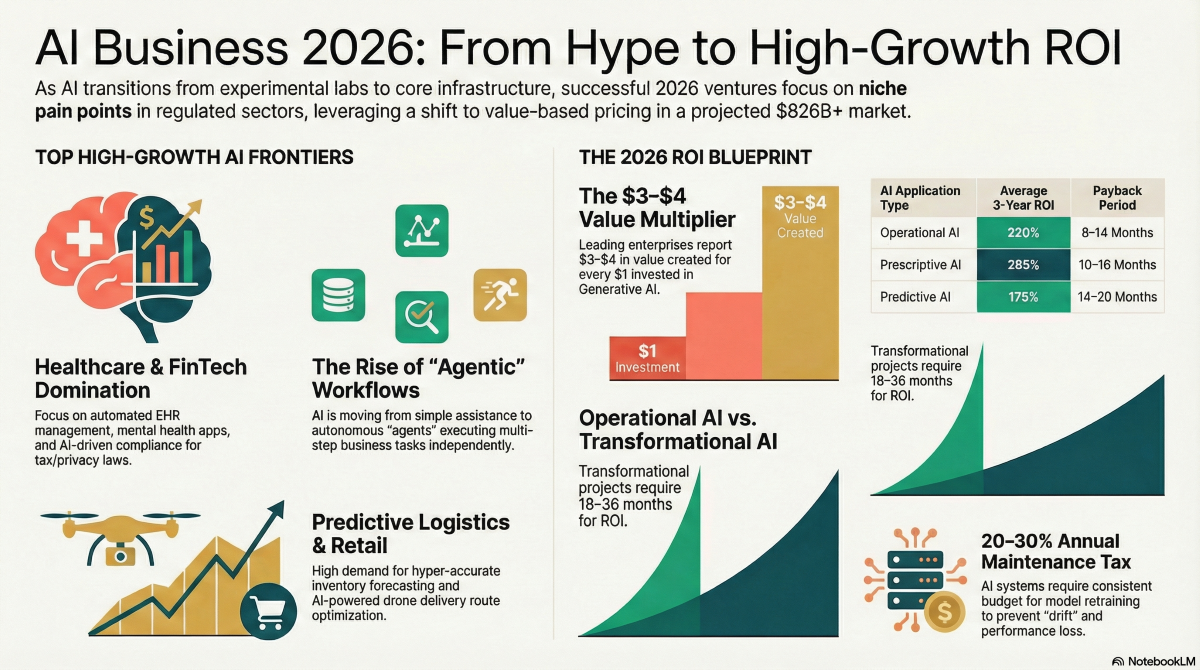
In this landscape, AI has ceased to be an experimental “side project” and has become core business infrastructure. The organizations dominating the market are those that have moved beyond isolated pilots to embed intelligence into the very fabric of their capital allocation and unit economics. Success in 2026 requires an architectural shift: treating AI as the operating system for strategic decision-making.
2. The $4 Rule: Why AI ROI is Finally Measurable
The 2026 fiscal cycle marks the end of “vague potential.” Enterprises now report an average of $3 to $4 of value for every $1 invested in generative AI. However, the true story lies in the specific ROI benchmarks across different AI implementations. Business architects are now prioritizing fiscal consolidation, cutting experimental tools to concentrate spend on platforms that demonstrate repeatable, high-yield outcomes.
Average 3-Year AI Return on Investment (2026 Data)
AI Project Category
Average 3-Year ROI
Payback Period
Primary Economic Value
Prescriptive AI
285%
10–16 months
Revenue growth, LTV improvement
Operational AI
220%
8–14 months
Labor cost & error reduction
Predictive AI
175%
14–20 months
Optimized targeting & forecasting
Generative AI
140%
18–26 months
Productivity & faster time-to-market
“Leaders are cutting experimental tools and concentrating spend on a smaller set of platforms and vendors that can demonstrate repeatable ROI rather than isolated pilots.”
3. Blue-Collar Gold 2.0: The High-Tech Facelift of Franchising
The most profitable sector of 2026 is the emergence of “Blue-Collar Gold 2.0”—the fusion of skilled trades with professional branding and AI-augmented operations. High-performing franchises are moving toward “asset-light” models that prioritize cash flow velocity and extreme operational leverage.
The profitability gap between traditional “mom-and-pop” shops and tech-forward franchises has widened into a chasm. Consider the Average Unit Volumes (AUV) defining the leaders:
Chick-fil-A: Leads the QSR sector with a staggering $7.5M AUV.
Raising Cane’s: Achieves $6.56M AUV through high throughput and lean margins.
McDonald’s: Maintains a $3.97M AUV, with 78% of units now exceeding the $3M threshold.
These entities, alongside service giants like SERVPRO and The UPS Store, are utilizing AI-powered marketing and automated local outreach to manage headcount and dominate regional territories, effectively turning single-location investments into multi-unit empires.
4. The Death of the Billable Hour: Pricing the Value, Not the Time
Generative AI has effectively commoditized time, rendering the traditional billable hour obsolete. Professional services firms are aggressively transitioning to “Value-Based Pricing” and “Productized Services.” By packaging expertise into repeatable, scalable software-led offerings, firms are capturing the compounding LTV of their intellectual property rather than selling their staff’s calendar.
The shift is a matter of mathematical survival: while legacy firms traditionally captured only 10-20% of their potential pipeline due to human staffing constraints, AI-enabled delivery models allow modern firms to capture 70-90% of that same pipeline. Leading examples, such as Littler Mendelson, have developed proprietary platforms that productize complex case management, delivering predictable outcomes at a higher margin than time-based models could ever sustain.
5. Subscription Sovereignty: The Shift from Ownership to Access
Subscription-based e-commerce is projected to exceed 900 billion by 2030**, while the **e-learning market** alone is on track to surpass **500 billion. This “Subscription Sovereignty” allows brands to bypass retail bottlenecks and secure long-term customer relationships through high-margin “auto-refill” models.
Top High-Margin E-commerce Niches (2026):
Pet Care & Food: Automated re-ordering for consistent, non-discretionary demand.
Smart Health Monitoring: Integrated app ecosystems with high customer retention and LTV.
Customized Beauty: AI shade matching reduces costly return rates while commanding premium pricing.
Personal Care & Supplements: Utilizing “auto-refill” strategies to bypass traditional retail shelf-space competition.
6. Trust as a Tangible Asset: The Economics of Governance
In 2026, cybersecurity is no longer an IT expense; it is a competitive differentiator. Mid-market firms have entered a “weird middle ground”: they are too large to be ignored by attackers but too small to possess Fortune 500 security budgets. Consequently, these firms are shifting 10-15% of IT budgets toward cybersecurity to prevent “medium” breaches that now cost an average of $4.8 million in direct expenses.
Strategic architects are now applying the “Gordon-Loeb 37% Rule,” which dictates that the optimal spend on protecting an asset is up to 37% of its expected loss.
“Trust is now a tangible business asset: a single misstep in using AI can generate reputational damage, legal exposure, and direct financial losses that dwarf the cost of doing governance properly.”
7. The “Micro-Vertical” Winner: Why Generalists are Fading
The 2026 economy belongs to the “T-shaped” professional and the specialized tool. Generalist AI models are losing ground to a “Specialization Explosion” in micro-verticals. Success is now found in micro-segmentation—delivering deep, niche-specific value that generalist platforms cannot replicate.
High-Yield Micro-Vertical Opportunities:
Healthcare Compliance AI: Models specifically trained on fluctuating medical regulations.
Predictive Risk Scoring for Logistics: Specialized algorithms that adjust flight and shipping paths based on real-time weather and tariff data.
AI-Driven Energy Management: Smart grids and energy regulation systems that optimize consumption for industrial assets.
8. Less is More: The Rise of High-Ticket Affiliate Ecosystems
The logic of digital monetization has moved toward High-Ticket Affiliate Marketing, focusing on products priced at $500 or more. By promoting enterprise-grade SaaS tools like Salesforce, HubSpot, or SEMrush, creators and consultants are generating significant revenue through fewer, higher-intent conversions.
The unit economics of this model are compelling:
High Payouts: Qualified leads can earn affiliates approximately $300 per referral.
Recurring Revenue: Programs like Flowlu or HubSpot offer up to 40% recurring commissions, creating a compounding income stream.
Multi-Partner Swarms: 2026 deals are increasingly shaped by clusters—MSPs, ISVs, and SIs—operating as an interconnected “swarm” to deliver a unified customer solution.
9. Conclusion: The Roadmap for the Next 12 Months
The year 2026 is a “convergence year” where channels, AI, and services merge into a single interconnected ecosystem. The primary opportunity is no longer “doing AI,” but embedding it into the fabric of how strategic decisions are made and products are built.
As the cost of model inference and API usage is projected to drop by 80% over the next 24 months, the question for every Business Architect is: Is your business architecture flexible enough to survive the next 80% drop in model inference costs, or are you still paying for yesterday’s inefficiencies?
2026 کا ڈیجیٹل منظرنامہ ایک ایسی تبدیلی کے دہانے پر کھڑا ہے جہاں پرانے ضابطے اپنی اہمیت کھو چکے ہیں۔ آج ویب سائٹ سے آمدنی کا حصول محض ایک تکنیکی ضرورت نہیں، بلکہ یہ ایک بدلتی ہوئی ڈیجیٹل معیشت میں اپنی جگہ بنانے کا نام ہے۔ وہ وقت گزر گیا جب روایتی طریقے کامیابی کی ضمانت ہوا کرتے تھے؛ اب ہمیں ایک نئی حکمتِ عملی کی ضرورت ہے۔
مستقبل کے اس تناظر میں، ویب سائٹ مالکان کے لیے یہ سمجھنا ضروری ہے کہ 2026 میں مونیٹائزیشن (monetization) کے معنی مکمل طور پر بدل چکے ہیں۔ یہ دور ان لوگوں کا ہے جو اس تیزی سے بدلتی ہوئی حقیقت کو تسلیم کرتے ہوئے خود کو نئے حالات کے مطابق ڈھالنے کے لیے تیار ہیں۔
اہم نکتہ نمبر 1: 2026 کا ڈیجیٹل افق
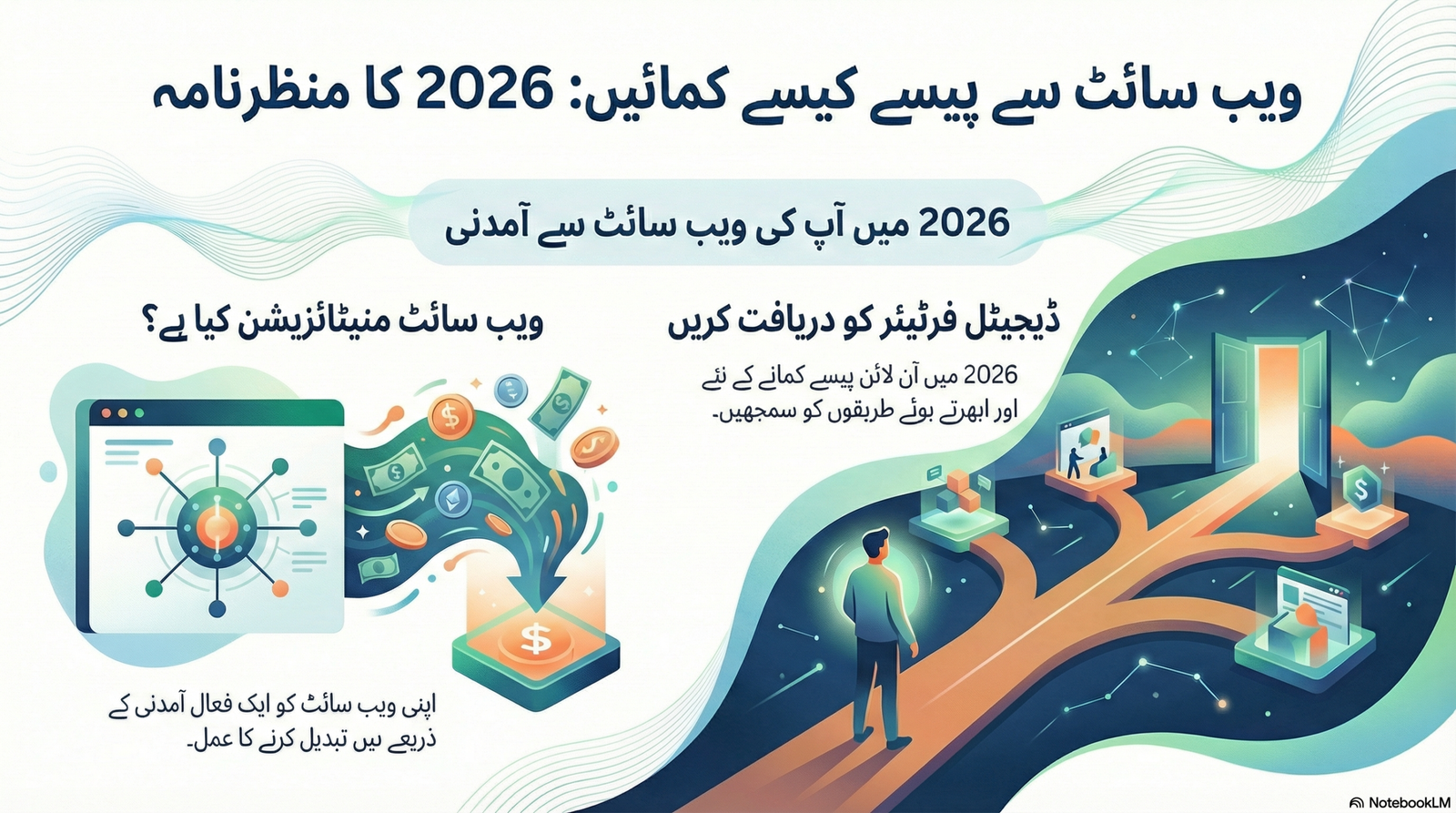
ذرائع کے مطابق 2026 میں ویب سائٹ مونیٹائزیشن کے حوالے سے جو سب سے نمایاں تبدیلی سامنے آئی ہے، وہ “ڈیجیٹل فرنٹیئر” کا تصور ہے۔ یہ تصور محض ایک اصطلاح نہیں بلکہ ویب سائٹ کے معاشی کردار میں ایک بنیادی تبدیلی کی نشاندہی کرتا ہے۔ اس کا سب سے اہم پہلو یہ ہے کہ ویب سائٹ اب محض معلومات کا ذریعہ نہیں رہی بلکہ ایک نئے معاشی سرحد کے طور پر ابھری ہے۔
“Digital Frontier: Monetizing Your Website in 2026”
ویب سائٹ مالکان کے لیے یہ تبدیلی اس لیے غیر معمولی ہے کیونکہ یہ روایتی حدود کو توڑ کر آمدنی کے نئے اور وسیع تر امکانات کی نشاندہی کرتی ہے۔ اس فرنٹیئر پر وہی لوگ کامیاب ہو سکتے ہیں جو جمود کا شکار ہونے کے بجائے مونیٹائزیشن کے جدید ترین طریقوں کو اپنانے کی صلاحیت رکھتے ہیں۔
اہم نکتہ نمبر 2: آمدنی کا نیا ماڈل
2026 کے تناظر میں ایک ایسی حکمتِ عملی جو بظاہر عام فہم نہیں لگتی، وہ ویب سائٹ کو ایک “مستقل مہم جوئی” کے طور پر چلانا ہے۔ ماضی میں ویب سائٹ کو ایک جامد پلیٹ فارم سمجھا جاتا تھا، لیکن اب کامیابی کا راز اس سوچ میں ہے کہ ویب سائٹ ایک مسلسل ارتقاء پذیر “ڈیجیٹل سرحد” ہے جس کی سرحدیں ہر لمحہ پھیل رہی ہیں۔
یہ اپروچ اس لیے زیادہ مؤثر ہے کیونکہ یہ ویب سائٹ مالک کو صرف موجودہ اشتہاری آمدنی تک محدود نہیں رکھتی، بلکہ اسے نئے اور اچھوتے معاشی راستے تلاش کرنے پر آمادہ کرتی ہے۔ اس نئے ماڈل میں اصل توجہ اس بات پر ہے کہ کس طرح ڈیجیٹل فضا میں اپنی موجودگی کو ایک ایسے “فرنٹیئر” کے طور پر پیش کیا جائے جو صارف کے لیے ناگزیر ہو۔
اہم نکتہ نمبر 3: ویب سائٹ کی اہمیت اور مستقبل
جیسے جیسے ہم 2026 کی گہرائی میں اترتے ہیں، ویب سائٹ کی اہمیت پہلے سے کہیں زیادہ بڑھ کر سامنے آتی ہے۔ ماخذ کے مطابق، ویب سائٹ آج بھی آن لائن آمدنی کا وہ مرکزی محور ہے جس کے گرد تمام ڈیجیٹل معیشت گردش کرتی ہے۔ اس کی بقا اور کامیابی کی سب سے بڑی وجہ اس کا وہ ڈھانچہ ہے جو براہِ راست آمدنی کے مواقع فراہم کرتا ہے۔
“how to make money online with website in 2026”
ویب سائٹ کی اہمیت میں اس اضافے کی اصل وجہ یہ ہے کہ یہ “کیسے کمانا ہے” کے سوال کا سب سے مستند اور پائیدار جواب فراہم کرتی ہے۔ 2026 میں آمدنی حاصل کرنے کا عمل اب محض ایک سادہ طریقہ کار نہیں رہا، بلکہ یہ ویب سائٹ کی طاقت کو ایک اسٹریٹجک اثاثے کے طور پر استعمال کرنے کا نام ہے۔
مستقبل کی حکمتِ عملی اور اختتام
مختصر یہ کہ 2026 میں ویب سائٹ سے آمدنی کا حصول ان لوگوں کے لیے ممکن ہے جو اسے ایک “ڈیجیٹل فرنٹیئر” کے طور پر دیکھتے ہیں۔ یہ نیا دور روایتی طریقوں سے ہٹ کر سوچنے اور اپنی ڈیجیٹل موجودگی کو ایک نئے معاشی مرکز کے طور پر مستحکم کرنے کا تقاضا کرتا ہے۔ ویب سائٹ کی افادیت آج بھی برقرار ہے، مگر اس سے فائدہ اٹھانے کے لیے آپ کو اپنے وژن کو 2026 کے تقاضوں کے مطابق ڈھالنا ہوگا۔
کیا آپ کا ڈیجیٹل اثاثہ 2026 کے اس نئے فرنٹیئر کو تسخیر کرنے کے لیے تیار ہے؟
AIInfo Blog: Top AI Information and Software Picks
Summary This page curates AIInfo blog posts that cover core AI concepts, leading platforms, software trends, and real-world applications. Entries range from foundational AI overviews and future impacts to tool roundups and content generators (including NSFW art tools and AI generator apps), plus practical guidance for 2026 such as monetization and remote work skills. It serves as a hub to explore how AI is transforming industries and everyday life through accessible guides and top 10 ai lists. For more ai information and top ai roundups, visit aiinfo.blog for curated insights on ai softwear, platforms, and tools by aiinfo.
Top 5 AI Platforms Revolutionizing Industries Today Artificial intelligence (AI) has become an indispensable tool across numerous industries, driving innovation
Understanding the Basics of Artificial Intelligence Artificial Intelligence (AI) is transforming our world. It simulates human intelligence in machines, enabling
Understanding the Basics of Artificial Intelligence Artificial Intelligence (AI) is transforming the world around us. It simulates human intelligence in
AI art generators are revolutionizing the digital art scene. They use machine learning to create unique artworks.
Among these, NSFW AI art generators cater to adult-themed content. They offer a creative outlet for artists seeking to explore this niche.
Many of these tools are available for free, though with limited features. They provide a cost-effective solution for artists on a budget.
Users can input text prompts to guide the AI in creating specific images. This allows for a personalized touch in the generated art.
In this article, we explore the top free NSFW AI art generators. Discover their features, usability, and unique offerings.
What Are NSFW AI Art Generators?
NSFW AI art generators are digital tools designed to create adult-themed artworks. They leverage artificial intelligence to produce erotic and sensual images.
These generators use algorithms that mimic artistic styles. They transform text inputs into visual content with explicit themes.
Key characteristics often include:
Ability to generate high-quality NSFW images
Text prompt guidance for customized outputs
Diverse style options for creativity
Ethical use is crucial when using these tools. These generators should be used responsibly and with consent.
by Logan Voss (https://unsplash.com/@loganvoss)
Key Features to Look For in Free AI Art Generators
When choosing a free AI art generator, certain features set the best apart. Quality output is a primary consideration for generating impressive art.
A good user interface makes these tools more accessible. It should be intuitive, even for beginners, to enhance the user experience.
Look for generators offering:
High-resolution image outputs
Customization options for styles and themes
Support for both SFW and NSFW modes
Active community forums for feedback and advice
These features ensure a smooth and creative experience. They help users craft art tailored to their vision.
Top Free NSFW AI Art Generators in 2024
Exploring the world of NSFW AI art generators reveals a variety of creative tools. These tools cater to artists seeking bold and unconventional artwork.
Each platform has unique features tailored for generating NSFW content. The tools vary in complexity, from beginner-friendly to advanced options for experienced users.
Here’s a list of the top free NSFW AI art generators in 2024:
Live3D NSFW AI Art Generator
HentaiAI
PornPen AI
NightCafe NSFW Mode
Stable Diffusion NSFW Models
These platforms offer a blend of creativity and innovation. They support artists in producing high-quality, specific art with ease.
The AI art generators highlighted here are popular for their performance and user base. Each tool provides distinct capabilities and encourages artistic exploration.
by Logan Voss (https://unsplash.com/@loganvoss)
1. Live3D NSFW AI Art Generator
Live3D provides an interactive platform for creating dynamic art. It focuses on generating 3D NSFW content. Users appreciate its rich customization features, including style adjustments and element control.
Its interface is straightforward, even for newcomers. Live3D remains a favorite for those pursuing detailed and expressive NSFW art.
by BoliviaInteligente (https://unsplash.com/@boliviainteligente)
2. HentaiAI
HentaiAI specializes in anime-style artwork with an NSFW twist. Its algorithms are optimized for detailed, anime-like images. Fans of anime will find this tool’s output impressive and accurate.
The platform supports a variety of customization options. It caters to users desiring specificity in art themes and styles.
by Yulin Wang (https://unsplash.com/@lanaill)
3. PornPen AI
PornPen AI offers a unique experience with its text-to-image functionality. It allows users to input prompts for personalized art creation. The tool is known for fast processing and high-quality results.
It serves a community looking for innovative ways to express adult content. The results are both unique and visually appealing.
by Florian Krumm (https://unsplash.com/@floriankrumm)
4. NightCafe NSFW Mode
NightCafe stands out with its vibrant community and collaborative features. It supports NSFW content generation within its creative space. Users can find inspiration and feedback from fellow artists.
Its NSFW mode ensures creative freedom, maintaining respect for boundaries. This balance makes it attractive to a diverse audience.
5. Stable Diffusion NSFW Models
Stable Diffusion is renowned for its superior algorithm and image clarity. It is versatile, offering multiple modeling options for artists. The NSFW models extend its functionality to adult content, preserving quality and detail.
This platform is ideal for experienced users seeking high-definition and precise art. It encourages experimentation with artistic styles.
How to Use a Free NSFW AI Image Generator
Using a free NSFW AI image generator is straightforward. Begin by selecting a platform that suits your creative needs. Each tool offers unique features for generating adult-themed art.
Follow these simple steps:
Choose an AI art generator platform.
Input a text prompt or select pre-designed options.
Customize styles or elements as needed.
Generate your NSFW art image.
A few clicks, and your custom NSFW artwork is ready. Enjoy experimenting with different themes and expressions.
by Chelsey Marques (https://unsplash.com/@astro_civil)
Tips for Creating the Best Free AI Art
Creating captivating AI art requires creativity. Start by experimenting with diverse prompts to discover what works best.
Consider these tips:
Use unique, descriptive prompts.
Explore various styles and themes.
Keep experimenting for unique results.
Stay patient and open-minded, allowing the AI to surprise you with its artistic prowess. Enjoy the creative journey!
Ethical and Legal Considerations
When using NSFW AI art generators, ethical concerns arise. Users should be aware of potential misuse and respect the guidelines.
Consider these aspects:
Understand copyright implications.
Avoid content that violates policies.
Respect others’ work and privacy.
Being mindful can ensure responsible and legal use, maintaining a healthy digital community. Respect boundaries and ethical practices while enjoying AI creativity.
Conclusion
Exploring free NSFW AI art generators opens new creative avenues. These tools enhance artistic expression and imagination without added costs, providing endless opportunities for digital creators.
Top 5 AI Platforms Revolutionizing Industries Today
Artificial intelligence (AI) has become an indispensable tool across numerous industries, driving innovation and efficiency at an unprecedented pace. As businesses seek to harness AI’s transformative potential, a plethora of platforms have emerged, each offering unique capabilities tailored to specific needs. This article delves into the top five AI platforms that are currently revolutionizing industries, underpinned by their advanced functionalities and robust ecosystems.
Before exploring the leading platforms, it is crucial to comprehend what constitutes an AI platform. Fundamentally, an AI platform provides the infrastructure and tools necessary for developing, deploying, and managing AI applications. These platforms offer a comprehensive suite of services, including machine learning (ML) algorithms, natural language processing (NLP), computer vision, and predictive analytics.
The burgeoning demand for AI solutions has led to the proliferation of service providers, each vying to offer the most comprehensive and user-friendly experience. Below, we examine the five AI platforms that are setting the benchmark in this dynamic field.
1. Google AI Platform
Google’s AI Platform stands as a beacon of innovation, integrating Google’s vast resources and cutting-edge research. This platform provides a rich suite of ML services, encompassing TensorFlow, a widely used open-source ML library. Its AutoML offerings enable users to build high-quality models with minimal expertise, democratizing access to sophisticated AI tools.
The platform’s robust infrastructure supports large-scale data processing, making it an ideal choice for enterprises dealing with voluminous datasets. Google AI Platform’s integration with Google Cloud further enhances its capabilities, offering seamless scalability and security.
Key Features
TensorFlow Integration: Facilitates the development of complex ML models.
AutoML: Simplifies the model-building process, enabling non-experts to create effective AI solutions.
Scalability: Supports extensive data processing, suitable for enterprise-level applications.
2. IBM Watson
IBM Watson represents a paradigm shift in AI service provision, leveraging its cognitive computing capabilities to deliver unparalleled insights. Watson’s strength lies in its NLP proficiency, enabling it to process and analyze unstructured data with remarkable accuracy. This feature is particularly beneficial in sectors such as healthcare, where interpreting vast amounts of textual data is crucial.
Watson’s adaptability and integration capabilities make it a versatile tool for businesses aiming to enhance operational efficiency and decision-making. Its suite of APIs allows for seamless integration with existing systems, providing a tailored AI experience.
Key Features
Natural Language Processing: Expertly analyzes unstructured data.
Cognitive Computing: Delivers deep insights, enhancing decision-making processes.
Integration: Offers flexible API solutions for seamless system integration.
3. Microsoft Azure AI
Microsoft Azure AI emerges as a formidable contender in the AI platform arena, offering a comprehensive suite of AI services built on Azure’s robust cloud infrastructure. This platform excels in providing end-to-end AI solutions, from data processing and model training to deployment and monitoring.
Azure AI’s integration with Microsoft’s ecosystem, including tools like Power BI and Dynamics 365, facilitates a unified approach to AI deployment. Its emphasis on responsible AI ensures that ethical considerations are embedded within AI applications, promoting transparency and fairness.
Key Features
Comprehensive AI Suite: Offers a full spectrum of AI services.
Ecosystem Integration: Seamlessly connects with Microsoft’s suite of tools.
Responsible AI: Prioritizes ethical considerations in AI development.
4. Amazon Web Services (AWS) AI
AWS AI delivers a powerhouse of AI services, underpinned by Amazon’s extensive cloud infrastructure. With offerings such as Amazon SageMaker, AWS AI simplifies the machine learning workflow, enabling developers to build, train, and deploy models efficiently. Its broad array of AI services spans NLP, computer vision, and speech recognition, catering to diverse business needs.
AWS AI’s scalability is unmatched, making it a preferred choice for enterprises requiring robust and reliable AI solutions. Additionally, its comprehensive security measures ensure data protection and compliance with industry standards.
Key Features
Amazon SageMaker: Streamlines the machine learning process.
Diverse AI Services: Offers a wide range of AI capabilities.
Scalability and Security: Provides reliable and secure AI solutions.
5. OpenAI
OpenAI has carved a niche as a pioneer in AI research and development, renowned for its groundbreaking work in artificial general intelligence (AGI). OpenAI’s focus on long-term AI safety and ethical considerations sets it apart, ensuring that its innovations align with broader societal goals.
by Markus Winkler (https://unsplash.com/@markuswinkler)
OpenAI’s API allows developers to integrate cutting-edge AI models, such as GPT-3, into their applications, delivering state-of-the-art NLP capabilities. Its commitment to open research and collaboration fosters an environment of innovation and knowledge sharing.
Key Features
Advanced AI Models: Provides access to state-of-the-art technologies like GPT-3.
Ethical AI Development: Prioritizes safety and ethical considerations.
Collaborative Ecosystem: Encourages open research and innovation.
Conclusion
As industries increasingly turn to AI to drive innovation and efficiency, selecting the right platform becomes paramount. The platforms discussed herein—Google AI Platform, IBM Watson, Microsoft Azure AI, AWS AI, and OpenAI—each offer distinct advantages, tailored to specific business needs and objectives.
When choosing an AI platform, organizations must consider factors such as scalability, integration capabilities, ethical considerations, and the specific AI services required. By aligning these factors with strategic goals, businesses can harness the full potential of AI, positioning themselves at the forefront of technological advancement.
In sum, these AI platforms are not merely tools; they are catalysts for transformation, empowering industries to redefine their operations and unlock new possibilities.
Artificial Intelligence (AI) software is reshaping our world. It is changing how we work, live, and interact.
AI tools are becoming essential in many industries. They help automate tasks and provide valuable insights.
AI platforms offer scalable solutions. They make deploying machine learning models easier and more efficient.
The evolution of AI technology is rapid. It is driven by advancements in machine learning and deep learning.
AI applications are diverse. They range from natural language processing to robotics and computer vision.
The future of AI software is promising. It includes more personalized and adaptive systems.
However, challenges remain. Ethical considerations and data privacy are significant concerns in AI development.
Despite these challenges, AI technology is expected to create new opportunities. It will transform existing roles and industries.
Understanding AI Software: Definition and Core Concepts
AI software refers to computer programs designed to perform tasks. These tasks mimic human intelligence, like problem-solving and learning.
At its core, AI technology processes large amounts of data. It identifies patterns and makes predictions based on this data.
AI software can adapt and learn from new information. This ability is due to algorithms that improve through experience.
There are several core concepts in AI software:
Machine Learning: Programs learn from data without being explicitly programmed.
Deep Learning: A subset of machine learning using neural networks with many layers.
Natural Language Processing: Enables machines to understand and respond to human language.
Computer Vision: Allows systems to interpret and make decisions based on visual data.
Understanding these concepts helps in grasping how AI platforms function. They form the foundation for more complex AI systems.
Through these core components, AI tools are continuously evolving. They are becoming more sophisticated, offering enhanced capabilities.
The Evolution of AI Technology: From Rule-Based Systems to Deep Learning
AI technology has undergone significant transformations over the years. It began with simple rule-based systems. These systems followed predetermined rules to make decisions.
Early AI tools were limited by rigid programming. They couldn’t adapt beyond their programming without human intervention. This limited their ability to handle complex tasks.
The introduction of machine learning marked a major advancement. AI platforms became capable of learning from data and improving over time. This shift allowed for more dynamic and adaptable systems.
Deep learning further revolutionized AI technology. It uses artificial neural networks to process vast datasets. This capability has led to breakthroughs in areas like image recognition and language translation.
Key developments in AI technology include:
Rule-Based Systems: Early AI, relying on if-then rules.
Machine Learning: Algorithms learn from data and adapt.
Deep Learning: Utilizing neural networks for complex problem-solving.
Reinforcement Learning: AI learns by interacting with its environment.
Each stage brought about more intelligent and versatile AI applications. The evolution from rule-based systems to deep learning has expanded AI’s capabilities dramatically.
Today, AI tools are more adaptive and powerful than ever. They continue to reshape industries by providing advanced solutions to complex problems.
by Enzo Tommasi (https://unsplash.com/@11×11)
Key Types of AI Software: Tools, Platforms, and Applications
AI software is a broad and evolving category. It encompasses various tools, platforms, and applications. Each has distinct roles in driving AI innovation.
AI tools are designed for specific tasks. They include software for data analysis, natural language processing, and image recognition. These tools help automate and optimize daily operations.
AI platforms offer a more comprehensive solution. They provide the infrastructure and algorithms needed to build AI applications. Developers use these platforms to deploy machine learning models and manage data efficiently.
AI software applications apply these tools and platforms to solve real-world problems. They enable innovations in fields like healthcare, finance, and transportation.
The types of AI software can be categorized as follows:
AI Tools: Specialized programs like TensorFlow, PyTorch.
AI Platforms: Comprehensive environments, e.g., IBM Watson, AWS AI.
Applications: End-user solutions, like chatbots and recommendation engines.
Each type serves a unique purpose in the AI ecosystem. AI tools are the building blocks for AI platforms, and applications emerge from the synergy between the two.
Businesses leverage these types to improve efficiency and insights. They are crucial in transforming industries by providing data-driven decision-making capabilities.
The versatility of AI software is its greatest asset. As technology evolves, the distinction between tools, platforms, and applications becomes increasingly integrated.
This integration is fostering the next generation of intelligent systems. Such advancements promise to further expand the capabilities of AI software.
by Shubham Dhage (https://unsplash.com/@theshubhamdhage)
How AI Tools Are Transforming Industries
AI tools are pivotal in the digital transformation of industries. They automate tasks that were once manual, enhancing productivity.
Industries like healthcare benefit significantly. AI tools improve diagnostics and personalize patient care. They analyze medical images swiftly and accurately.
In finance, AI aids in risk management and fraud detection. Algorithms can detect unusual patterns quickly, minimizing threats. This enhances the security of transactions.
Retail businesses use AI to understand consumer behavior better. Predictive analytics help in designing targeted marketing strategies. This leads to improved customer engagement.
Manufacturing has also undergone an AI revolution. Automation tools streamline production processes. This reduces waste and increases efficiency.
The following are key ways AI tools are transforming industries:
Enhancing medical diagnostics and treatment plans
Automating customer service with chatbots
Improving financial forecasting and fraud detection
Streamlining supply chain management and logistics
Personalizing retail experiences for consumers
AI tools also play a crucial role in the energy sector. They optimize consumption and promote sustainability. Smart grids use AI to balance supply and demand effectively.
Education is another sector witnessing transformation. AI tools personalize learning, adapting to each student’s pace and style. This results in better academic outcomes.
The entertainment industry leverages AI for content recommendations and creation. This enhances user satisfaction and engagement.
by Eka Cahyadi Hasti (https://unsplash.com/@ekacahyadihasti)
Leading AI Platforms: Features, Capabilities, and Use Cases
AI platforms form the backbone of modern AI deployments. They offer the infrastructure needed to build and run AI applications efficiently. These platforms are designed for scalability and flexibility.
Leading AI platforms include giants like Google Cloud AI, AWS AI, and Microsoft Azure AI. They provide comprehensive tools for machine learning, data processing, and model deployment.
Google Cloud AI offers powerful data analysis tools. It supports deep learning models and offers pre-trained APIs for common tasks like image recognition and language processing.
AWS AI is known for its vast range of services. It includes machine learning algorithms and frameworks tailored for developers and data scientists. AWS also provides extensive storage and computing capabilities.
Microsoft Azure AI brings integration capabilities. It allows developers to embed AI into applications using familiar programming languages. Azure’s data services are highly praised for their versatility.
Common features of leading AI platforms include:
Machine learning model training and deployment
Scalable data storage solutions
Advanced data analytics capabilities
Pre-built APIs for various AI services
Integration with other cloud services
AI platforms are used across industries for diverse applications. In healthcare, they facilitate real-time patient data analysis. In finance, platforms support automated trading and risk analysis.
For retail, AI platforms enhance inventory management and personalized shopping experiences. Meanwhile, in manufacturing, they optimize production lines through predictive maintenance.
These platforms significantly lower the barrier to entry for businesses. Small startups and large corporations alike can harness AI’s power without substantial upfront investment.
by Shubham Dhage (https://unsplash.com/@shubhudi)
AI in Action: Real-World Applications Across Sectors
AI software is transforming various industries by introducing innovative solutions. The adoption of AI is growing rapidly across multiple sectors. Each application highlights AI’s versatility and impact.
In healthcare, AI enhances diagnostics. Algorithms analyze medical images with high precision, aiding in early disease detection. AI systems also manage patient data and predict treatment outcomes more efficiently.
Finance is another sector benefiting greatly from AI. AI software automates fraud detection, quickly identifying unusual patterns and transactions. It also supports personalized banking by analyzing customer behavior, thus improving service delivery.
Retail businesses use AI to enhance customer experiences. AI-driven analytics offer personalized shopping recommendations. Retailers optimize inventory and pricing strategies, leveraging AI to predict demand patterns.
The manufacturing sector utilizes AI for improved efficiency. Predictive maintenance powered by AI reduces equipment downtime. AI software optimizes supply chain operations, improving production flow and resource management.
In the realm of transportation, AI fosters development of autonomous vehicles. These vehicles rely on AI for navigation and safety. AI solutions also improve traffic management, reducing congestion and travel times.
Education is gradually adapting AI tools to personalize learning. AI platforms track student progress and offer tailored educational content. This personalization enhances student engagement and improves educational outcomes.
AI is also making strides in the entertainment industry. Content recommendation systems provide users with customized options. AI-driven special effects enhance visual storytelling, captivating audiences with new experiences.
Some common real-world applications of AI include:
Automated fraud detection systems
Predictive maintenance in manufacturing
Personalized education platforms
Autonomous vehicles and navigation systems
AI-driven customer service chatbots
The breadth of AI applications reflects its transformative power. By integrating AI, industries are not only enhancing their operations but are also paving the way for future innovations.
by Pi Supply (https://unsplash.com/@pisupply)
Benefits of AI Software for Businesses and Society
AI software brings numerous advantages that extend across business environments and societal landscapes. By leveraging AI tools, companies can drive efficiency and growth.
Businesses benefit from AI in several ways. Automation of routine tasks frees up human resources for complex duties. AI streamlines workflows, making operations more efficient and less prone to error.
AI also aids in decision-making by analyzing vast amounts of data. This data-driven approach provides valuable insights, allowing businesses to adapt swiftly to market changes. Enhanced analytics foster better strategic planning and competitive advantage.
For society, AI holds significant promise. Healthcare improves through faster diagnoses and personalized treatments. In education, AI offers tailored learning experiences, which cater to diverse student needs and improve overall outcomes.
Moreover, AI contributes to sustainability by optimizing energy use. Intelligent systems predict consumption patterns, reducing waste and promoting eco-friendly practices. These benefits underscore AI’s potential to address pressing global challenges.
Some key benefits of AI software include:
Enhanced operational efficiency
Improved decision-making capabilities
Greater personalization in healthcare and education
Energy optimization and sustainable practices
The broad impact of AI software signals its crucial role in modern transformation. By embracing AI, businesses and society can harness its power for a prosperous future.
by Erik Mclean (https://unsplash.com/@introspectivedsgn)
Challenges and Ethical Considerations in AI Software Development
The development of AI software comes with its own set of challenges and ethical considerations. These issues must be addressed to ensure the responsible use of AI technology.
One of the primary concerns is data privacy. AI systems require large amounts of data for training. This raises questions about how data is collected, stored, and used. Companies must implement strong privacy measures to protect user information.
Bias in AI algorithms is another pressing issue. If the data used to train AI models is biased, the outcomes may also be biased. This can lead to unfair treatment or discrimination in various applications, from hiring processes to law enforcement.
Transparency is crucial for building trust in AI systems. Users should understand how AI tools make decisions, especially in critical areas like healthcare or finance. Clear communication about AI’s capabilities and limitations is essential.
The potential job displacement due to automation is another concern. As AI automates routine tasks, there may be fewer employment opportunities in certain sectors, necessitating job retraining and education.
Some major challenges include:
Ensuring data privacy and security
Reducing bias in AI algorithms
Increasing transparency in AI processes
Addressing potential job displacement
Addressing these challenges requires collaboration between developers, policymakers, and society. Through responsible AI development, we can ensure technology benefits everyone.
by Nicolas Hoizey (https://unsplash.com/@nhoizey)
The Future of AI Software: Trends and Emerging Technologies
AI software is on the brink of significant advancements. Emerging technologies promise to reshape various aspects of this field. One key trend is the integration of AI with other technologies.
Quantum computing is an exciting development. It has the potential to process complex calculations much faster than current computers. This could significantly speed up AI model training and improve performance.
5G technology is another catalyst for AI growth. With faster and more reliable internet, data can be processed and transmitted more efficiently. This enables real-time AI applications and enhances user experiences.
Another promising area is the development of more intuitive AI systems. These systems will interact with humans in more natural, human-like ways. Improved natural language processing will make these interactions more seamless.
AI is also expected to become more personalized. Future AI tools will adapt to individual user preferences, providing more customized services. This personalization will likely enhance user satisfaction and engagement.
Innovative AI trends to watch include:
Integration with quantum computing
Use of 5G for real-time applications
Advances in natural language processing
Increased focus on personalization
These trends point to a future where AI is more integrated into everyday life. As AI platforms become more advanced, they will drive innovation across sectors, improving efficiency and opening new possibilities.
by Sharad Bhat (https://unsplash.com/@sharadmbhat)
How to Choose the Right AI Tools and Platforms
Choosing the right AI tools and platforms can be daunting. There are numerous options, each with unique features and benefits. It’s crucial to align your choice with specific business needs and goals.
Start by assessing your current technology infrastructure. Ensure that the AI platform can integrate seamlessly with your existing systems. Compatibility reduces implementation costs and maximizes the efficiency of the AI solution.
Also, consider the scalability of the platform. As your business grows, your AI needs may evolve. Selecting a platform that scales easily will provide long-term value and adaptability.
Evaluate the user-friendliness of the tools. This is especially important if your team lacks extensive AI experience. A platform with intuitive interfaces and comprehensive support can expedite the learning curve.
Key considerations when choosing AI tools and platforms include:
Integration with current systems
Scalability for future growth
User-friendliness and support
Cost versus feature balance
Making an informed choice ensures that your AI investment delivers maximum returns. A strategic approach to selecting AI tools and platforms can greatly enhance your business operations.
by kenny cheng (https://unsplash.com/@kenny161616)
Building and Integrating AI Solutions: Best Practices
Building and integrating AI solutions requires a well-thought-out approach. A strategic plan ensures successful deployment and maximizes the benefits of AI technology. Start with clear objectives to align your efforts with business goals.
Collaboration is key during implementation. Involve cross-functional teams, including IT, operations, and management. This approach ensures comprehensive insights and aligns technological initiatives with business operations effectively.
It’s also vital to maintain data quality. Clean, organized data is the backbone of any AI solution. Poor data quality can lead to inaccurate analytics and poor decision-making. Establish robust data management practices from the start to prevent this.
Finally, focus on continuous learning and adaptation. AI systems evolve over time, requiring regular updates and iterations. Encourage ongoing training for your team to handle these dynamic technologies effectively.
Consider these best practices for successful AI integration:
Set clear objectives
Foster cross-functional collaboration
Ensure data quality and consistency
Encourage continuous learning
Implementing these practices can lead to efficient AI solution integration and enhanced business productivity.
by Gregory van der plank (https://unsplash.com/@gregvdp1980)
The Human Side of AI: Collaboration, Creativity, and New Opportunities
The rise of AI software is reshaping the landscape of human collaboration and creativity. People and machines are increasingly working side by side. This collaboration opens doors to new opportunities and innovative ways to solve complex problems.
AI frees humans from repetitive tasks, allowing more focus on creative thinking. This shift can enhance job satisfaction and unleash more innovative potential. Workers have more time for tasks requiring emotional intelligence and strategic decision-making.
Moreover, AI technology is driving unprecedented opportunities in various sectors. It creates new roles that require a blend of technical skills and creative insight. Understanding AI’s capabilities can lead to career advancement and fresh business ventures.
To harness AI’s full potential, businesses and individuals should focus on the following:
Embrace lifelong learning
Cultivate creative thinking
Develop technical and emotional intelligence
By nurturing these skills, individuals can thrive in an AI-driven world.
by Andrea De Santis (https://unsplash.com/@santesson89)
Conclusion: Embracing the Future of AI Software
As AI technology rapidly advances, its impact is becoming more profound across all aspects of life. The potential benefits are vast, from enhancing business operations to improving personal experiences. Understanding and integrating AI responsibly is essential for maximizing these benefits.
Embracing AI involves a commitment to continuous adaptation and learning. The landscape is ever-changing, and staying informed about new developments is crucial. Businesses and individuals alike must invest time in exploring AI tools and platforms.
Ethical considerations must also be at the forefront. Ensuring AI’s responsible use involves addressing concerns about privacy, fairness, and accountability. This ethical approach fosters trust and encourages broader AI adoption.
In conclusion, AI software offers thrilling opportunities for growth and innovation. By approaching AI with curiosity, responsibility, and an open mind, society can harness its transformative power. Embracing AI’s future will not only drive technological progress but also enrich human endeavors.
Artificial intelligence (AI) is transforming our world. It influences how we live, work, and interact. Understanding AI information is crucial in today’s tech-driven society.
AI encompasses a wide range of technologies. These include machine learning and deep learning. Each plays a vital role in AI’s development and application.
AI is not just for tech experts. It impacts various industries, from healthcare to finance. Staying informed about AI news and trends is essential for everyone.
The potential of AI is vast. It promises to revolutionize industries and improve efficiency. However, it also presents challenges and ethical considerations.
This guide will explore the basics of AI information. We’ll cover key concepts, applications, and future trends. Join us on this journey to understand AI’s impact.
What is AI Information?
AI information refers to data and insights related to artificial intelligence. It includes details about AI technologies and their functions. This information is key to understanding how AI works and its various applications.
AI information covers several areas. These include:
Machine learning algorithms
Deep learning models
Neural networks
Each component contributes to AI’s capability to process data and make decisions.
The significance of AI information extends beyond just technology. It helps businesses innovate and stay competitive. By understanding AI information, organizations can make informed tech adoption decisions. This knowledge also aids in identifying new opportunities and enhancing efficiency. AI information is, therefore, an essential resource for navigating the evolving tech landscape.
Key Concepts: Artificial Intelligence, Machine Learning, and Deep Learning
Artificial intelligence is the broad field dedicated to creating intelligent machines. These machines mimic human intelligence to perform various tasks. They include anything from simple tasks to complex problem-solving.
Machine learning is a key subset of AI. It enables systems to learn from data and improve over time. Instead of relying on explicit programming, these systems use algorithms to identify patterns. Machine learning drives many AI applications today.
Deep learning is a more advanced subset of machine learning. It uses multi-layered neural networks to analyze large data sets. This method mimics the human brain’s neural network. It excels at recognizing patterns, such as in image and speech recognition.
Key concepts to remember:
Artificial intelligence (AI)
Machine learning (ML)
Deep learning (DL)
Each plays a crucial role in the evolution and application of AI technologies. Understanding these distinctions helps in grasping the complexity and potential of AI.
How AI is Used Today: Applications Across Industries
AI has a significant impact on various sectors. Its applications enhance efficiency and innovation. From healthcare to finance, AI changes how industries operate.
In healthcare, AI aids in diagnostics and personalized treatment plans. Machine learning algorithms analyze medical data swiftly. This helps doctors make informed decisions quickly.
In finance, AI improves fraud detection and risk management. AI systems process large amounts of data in real time. This rapid analysis allows for proactive measures to protect assets.
In the automotive sector, AI contributes to the development of autonomous vehicles. It assists in enhancing driver safety and navigation systems. AI technology transforms how we experience travel.
Key AI applications include:
Healthcare: Diagnostics and personalized treatment
Finance: Fraud detection and risk management
Automotive: Autonomous vehicles and driver assistance
Across industries, AI is a driving force. It powers innovation and fosters opportunities for growth.
by Buddha Elemental 3D (https://unsplash.com/@buddhaelemental3d)
Staying Updated: The Importance of AI News and Trends
Keeping up with AI news is vital in a fast-moving world. Innovations in AI can influence various aspects of life. New developments can shift industry standards unexpectedly.
AI trends signal where the technology is heading next. Businesses must recognize these trends to remain competitive. This awareness fosters informed decisions about technology adoption.
Monitoring AI news includes understanding ethical shifts and breakthroughs. Ethical considerations are pivotal in the adoption of AI systems. Trends also reveal progress in AI research and applications.
Essential aspects to monitor in AI news include:
Breakthroughs in AI research
Emerging ethical guidelines
New industry applications and trends
Engaging with AI news not only educates but also equips individuals and businesses. It paves the path for navigating a future shaped by AI advancements.
Benefits and Challenges of AI Information
AI information brings numerous advantages across fields. It boosts efficiency by automating tedious tasks. These innovations create room for human creativity and decision-making.
Nonetheless, challenges accompany these benefits. Ethical issues like bias in algorithms can’t be ignored. Addressing privacy concerns is essential to gaining trust.
AI information helps industries like healthcare and finance refine their processes. Companies can leverage AI insights for better customer service. This can lead to improved user experiences and personalized interactions.
However, the challenges are not insignificant:
Potential job displacement
Privacy and data security issues
Algorithmic bias and ethical concerns
by British Library (https://unsplash.com/@britishlibrary)
Understanding AI information involves balancing its potential with its risks. Navigating this landscape requires awareness and strategic management. Stakeholders must weigh advantages while addressing potential drawbacks to harness AI’s full power.
Ethical Considerations and Risks in AI
Ethical considerations are crucial in the deployment of AI technologies. They shape how society perceives and adopts these innovations. AI systems must prioritize transparency and fairness to earn public trust.
Risks associated with AI technologies can impact both individuals and organizations. Privacy is a major concern due to vast data collection. Protecting personal information requires stringent security measures.
Algorithmic bias presents another significant risk. Poorly designed algorithms may perpetuate social inequities. Addressing these concerns is imperative for responsible AI use. Key ethical considerations include:
Ensuring privacy and data protection
Mitigating algorithmic bias
Balancing innovation with ethical standards
Navigating these ethical landscapes is challenging. However, it’s necessary to achieve the safe and beneficial integration of AI into society.
The Future of AI: What Lies Ahead?
The future of AI holds immense potential across various sectors. Integration with technologies like IoT and blockchain is expected. This synergy promises smarter, more efficient systems.
AI’s evolution focuses on enhanced learning models and improved natural language processing. These advancements could revolutionize human-computer interactions. Better algorithms mean more accurate predictions and decisions.
With ongoing research, AI could address global issues like climate change and healthcare. However, challenges like ethical considerations and data privacy must be handled. Future trends in AI may include:
Collaborative AI systems
Enhanced machine learning models
Advanced AI-driven solutions for global challenges
Navigating these potential advances requires foresight and careful planning. Embracing AI’s future will shape the modern technological landscape.
Conclusion: Why Understanding AI Information Matters
Grasping AI information equips individuals and businesses with the tools to navigate rapid tech advancements. It empowers informed decision-making.
As AI reshapes industries and influences daily life, staying informed is crucial. Understanding AI’s nuances is key to leveraging its potential responsibly. The future will be shaped by those who fully comprehend and utilize AI effectively. This knowledge is a vital asset in today’s digital age.
Artificial intelligence is transforming our world at an unprecedented pace. From healthcare to finance, AI is reshaping industries and redefining possibilities. Its influence is growing, and its potential seems limitless.
Machine learning and data science are at the heart of this revolution. These technologies enable systems to learn, adapt, and improve without direct human intervention. As AI continues to evolve, its applications are becoming more sophisticated and widespread.
The future of AI holds both promise and challenges. Ethical considerations and regulations are crucial to ensure responsible development. As we navigate this new frontier, understanding AI’s impact on society is more important than ever.
The Evolution of Artificial Intelligence
Artificial intelligence has come a long way since its inception. Initially, AI systems relied heavily on predefined rules. Today, they are increasingly self-learning and adaptive.
Key developments in AI include:
Introduction of neural networks
Advancements in natural language processing
Rapid growth in computational power
These advancements have enabled AI to tackle more complex tasks. It can now perform functions that were once considered purely human. The scope of AI’s capabilities is expanding into previously unimaginable areas.
Artificial intelligence is no longer a distant concept. It is a dynamic force shaping our present and our future. As it continues to evolve, new opportunities and challenges will arise.
Key Technologies: Data Science, Machine Learning, and Smart Devices
Data science, machine learning, and smart devices are integral to artificial intelligence. These technologies are transforming industries with innovative solutions and personalized experiences.
Data science drives AI by processing vast amounts of data. This data powers machine learning models to identify patterns and make predictions. Machine learning enables systems to learn and evolve without direct programming.
Applications of these technologies include:
Enhanced user interactions through smart devices
Improved decision-making using predictive analytics
Increased automation and efficiency in businesses
New artificial intelligence phones exemplify this synergy. They offer personalized experiences, adapting to users’ habits. As these technologies advance, their integration will further enhance everyday life.
Societal Impact: Opportunities and Challenges
Artificial intelligence promises to transform society. It brings numerous opportunities, from healthcare advancements to innovative business solutions. Automation increases efficiency and productivity across industries, reshaping economic landscapes.
However, AI also poses challenges. The risk of job displacement is significant, necessitating workforce reskilling. There are also concerns about privacy and ethical use of AI technologies. Balancing progress with responsibility is crucial.
Potential societal impacts include:
Enhanced healthcare through personalized treatment
Transformations in transportation via autonomous vehicles
Improvement in disaster response and climate predictions
AI’s influence extends to creative and educational fields. Art and music evolve with AI-generated content. Education benefits from personalized learning paths. Emphasizing ethical AI development ensures society maximizes benefits while minimizing risks.
The Role of Ethics and Regulation in AI Development
Ethics play a vital role in AI development. Ensuring AI aligns with human values is essential. Without ethical guidelines, AI could lead to negative outcomes, like biased decision-making. Therefore, establishing clear ethical standards is crucial for responsible AI use.
Regulation is equally important. Governments need to develop policies that guide AI innovation without stifling it. Effective regulation can protect privacy and security. To achieve this balance, collaboration between stakeholders is necessary.
Key ethical considerations include:
Fairness and inclusivity
Transparency of AI systems
Protection of individual privacy
The Road Ahead: What the Future Holds for AI
The future of AI promises unprecedented opportunities. Emerging technologies like quantum computing will enhance AI’s capabilities. We can expect smarter solutions and improved decision-making processes. AI’s role in industries will likely expand, driving productivity.
However, challenges remain. There are concerns about job displacement and the need for reskilling. Addressing these challenges is critical for ensuring a smooth transition. Workforce training programs will be essential in this process.
Future advancements in AI could include:
Enhanced natural language processing
Integration of AI in smart cities
Development of autonomous transport systems
by Max Böhme (https://unsplash.com/@max_boehme)
The future of AI is both promising and daunting. As we navigate this path, collaboration and innovation will be key to harnessing AI’s full potential.