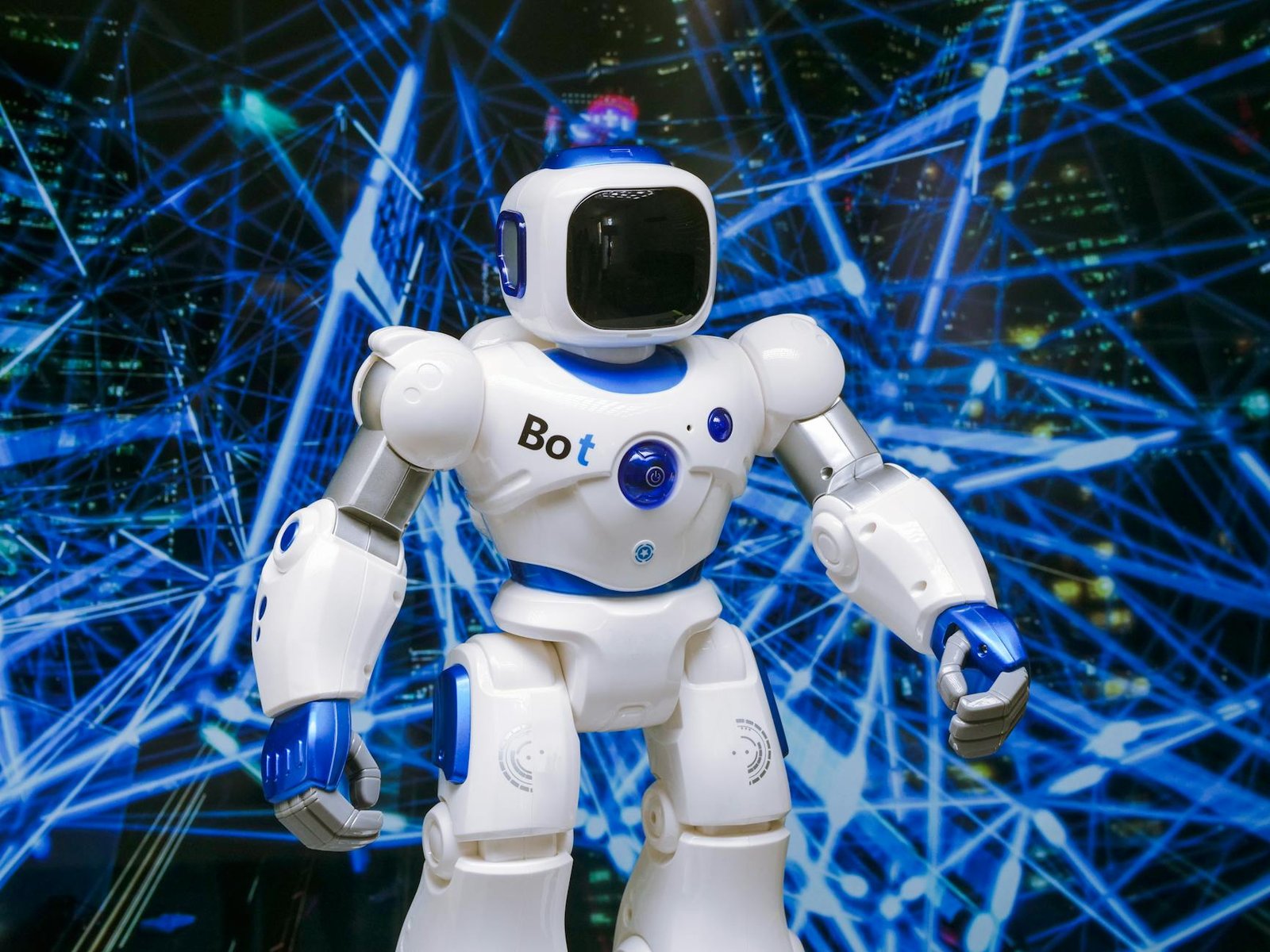

Understanding the Basics of Artificial Intelligence
Artificial Intelligence (AI) is transforming the world around us. It simulates human intelligence in machines, enabling them to perform tasks like humans. From voice assistants to self-driving cars, AI is everywhere.
Understanding AI is crucial in today’s tech-driven world. It helps us adapt to rapid technological changes and leverage AI’s benefits. This article will provide a clear AI overview, including its definition, types, and applications.
Join us as we explore the basics of AI. Discover its significance and potential impact on our future.
What Is Artificial Intelligence? (AI Definition and Overview)
Artificial Intelligence refers to machines designed to mimic human intelligence. These systems can interpret complex data, learn from it, and act upon it. The term “AI” was first coined in 1956.
AI performs tasks that once required human thought. These tasks include speech recognition, decision-making, and visual perception. There is a broad range of capabilities that AI encompasses.

AI can be categorized based on capabilities:
- Reactive Machines: Basic, no memory, narrow tasks.
- Limited Memory: Learns from past, simple memory use.
- Theory of Mind: Understands emotions and social cues (still theoretical).
- Self-aware AI: Future AI, self-consciousness (not yet realized).
This AI overview highlights its transformative power. Understanding what AI is can help you grasp its vast potential.
Key Types of AI: Narrow vs. General
AI can be broadly classified into narrow and general types. Narrow AI, also known as weak AI, specializes in specific tasks. For example, it powers facial recognition systems or sorts emails.
General AI, on the other hand, remains theoretical. It aims for a machine capable of performing any intellectual task that a human can. Creating general AI is a major research goal.
Key differences between these AI types include:
- Narrow AI: Designed for one task, widely used today.
- General AI: Aspires for human-like understanding, still in development.
Core Concepts: Machine Learning, Deep Learning, and Neural Networks
Machine learning forms the backbone of AI. It allows computers to learn and make decisions based on data. This process involves feeding huge data sets into algorithms for prediction.
Deep learning is an advanced form of machine learning. It uses neural networks with layers to identify patterns and solve complex tasks. This method mimics human brain functions.
Neural networks structure data in a way that enhances learning. They help in tasks such as image and speech recognition.
Key concepts include:
- Machine Learning: Algorithms that self-improve.
- Deep Learning: Multi-layered approach to data analysis.
- Neural Networks: Brain-inspired data processors.

Real-World Applications of AI
Artificial intelligence has become an integral part of numerous industries. Its capabilities extend far beyond imagination and continue to grow. The influence of AI in everyday tasks is undeniable and profound.
In healthcare, AI aids doctors in diagnosing diseases accurately and personalizing patient care. Financial institutions utilize AI for fraud detection and to optimize trading strategies. Furthermore, AI enhances the safety and efficiency of autonomous vehicles.
AI’s versatility allows it to revolutionize sectors such as:
- Healthcare: Disease diagnosis and treatment plans
- Finance: Detecting fraud
- Automotive: Powering autonomous vehicles

by Sufyan (https://unsplash.com/@blenderdesigner)
The Importance and Future of AI
The significance of artificial intelligence in today’s world cannot be overstated. It enhances productivity across various sectors, offering innovative solutions to complex problems. The potential of AI to transform industries is immense, and its impact on the workforce is noteworthy.
Looking ahead, AI promises even more advanced capabilities. It is set to play a pivotal role in shaping future technological landscapes. Innovations in AI are expected to streamline processes and foster new opportunities.
Anticipated advancements in AI include:
- More autonomous systems
- Enhanced natural language processing
- Revolutionary robotics developments
Ethical Considerations and Challenges
Artificial intelligence raises significant ethical questions. Privacy concerns are prevalent as AI systems process vast amounts of data. Transparency in AI decision-making is also critical yet challenging to achieve fully.
Job displacement is another major concern as AI automates tasks traditionally performed by humans. Balancing technological advancement with societal needs remains a pressing challenge as AI continues to evolve.
Leave a Reply