
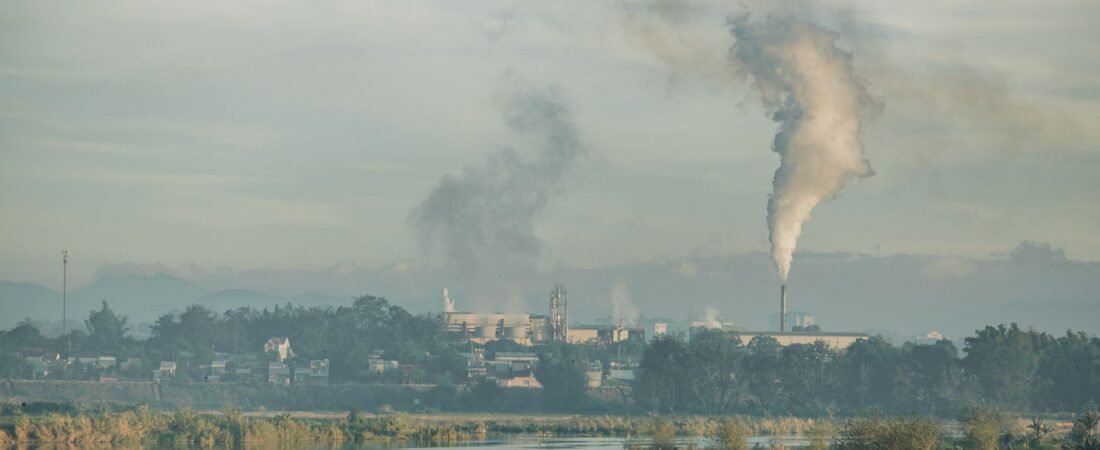
Is AI Bad for the Planet? What the Evidence Shows
Last updated: November 2026. Estimates in this area change quickly and often disagree, so treat the numbers as ranges, not exact facts.
Few claims about AI spread faster than the ones about its environmental cost. You may have seen posts saying that every chatbot question “drinks a bottle of water”, or that AI will wreck the climate. You may also have seen the opposite: that the worry is overblown and AI will help save the planet.
So which is it? The honest answer is that both sides have a point. AI does use real energy and water, and its demand is growing fast. At the same time, some popular claims are exaggerated. This guide looks at what credible sources say, where experts disagree, and what it means for you.
The Short Answer
AI has a real and growing environmental footprint. However, one chat message from you is very small, while the combined effect of billions of messages and huge new data centers is large. In other words, the problem is less about any single prompt and more about total growth.
Whether that growth is “bad for the planet” depends on several things: how the electricity is produced, where the data centers sit, how efficient the technology becomes, and what AI is used for. Experts disagree about how these factors will balance out.
How Much Electricity Does AI Use
Data centers are the buildings full of computers that train and run AI. They also run streaming, email, cloud storage, and much of the internet. So it helps to separate AI from the rest.
Here are the main numbers from the International Energy Agency (IEA), a respected global energy organization:
- Data centers used about 1.5% of the world’s electricity in 2025.
- Their electricity demand grew 17% in 2025, while overall global electricity demand grew about 3%. AI-focused data centers grew even faster.
- By 2030, the IEA expects data centers to use about 3% of global electricity, with demand more than doubling to roughly 945 to 950 terawatt-hours.
- The United States and China account for most of the expected growth.
- AI makes up only part of the total. One summary of IEA data puts AI at roughly 15% to 20% of data center electricity use, with the rest supporting other digital services. That share is expected to rise.
In the United States, a government-backed study from Lawrence Berkeley National Laboratory found that data centers used about 4.4% of national electricity in 2023. It projected a range of roughly 6.7% to 12% by 2028. These are projections, and they carry real uncertainty.
What About One Chat Message
This is where many claims go wrong. Per-question energy is small, but it varies a lot.
- Typical large-model queries: A 2026 study by Microsoft, published in a peer-reviewed energy journal, estimated that a typical query to a large AI model uses between 0.16 and 0.60 watt-hours. That’s a small amount, similar to running a bright LED bulb for a few minutes. Keep in mind that a company ran this study, so independent checks matter.
- Heavy tasks use much more: Independent researchers who tested many models found that long prompts on the most power-hungry reasoning models can use over 33 watt-hours, which is dozens of times more than small models.
- Newer uses cost more: The IEA notes that simple text generation uses very little energy, but longer, multi-step “agentic” tasks and video generation use much more.
- Efficiency is improving fast. The IEA says energy per AI task is dropping at a rate with little precedent in energy history, and Microsoft’s study estimates large near-term gains from better chips and software.
Even so, a United Nations-linked report adds an important warning. Once a model is released, answering everyday questions makes up around 80% to 90% of its total energy use. When AI becomes cheaper and easier, people use it more, which can wipe out the savings. Experts call this a rebound effect.
What About Water
AI uses water in two ways, and mixing them up causes a lot of confusion.
- Direct water: Many data centers use water to cool equipment.
- Indirect water: Power plants use water to generate the electricity that data centers consume.
Researchers at Harvard studied 472 large U.S. data centers. They estimated about 300 billion liters of operating water use per year, and found that about three-quarters of it was tied to electricity generation, not cooling at the data center itself.
Per-message figures vary widely. Google has reported about 0.26 milliliters of cooling water per median prompt for its Gemini model, and OpenAI has described a similar tiny amount, about 0.32 milliliters per average query. However, these company figures cover direct cooling only. When researchers include water used at power plants, the estimates rise to a few milliliters or more, depending on assumptions. So the idea of a whole bottle per question looks exaggerated, but the water footprint isn’t zero either.
Location Matters Most
A million liters means different things in different places. In a region with plenty of water, the effect may be small. In a dry region, a large data center can add real pressure on local supplies. Researchers note that cooling water creates local stress, especially in water-scarce parts of the western and south-central United States. Reports from other countries describe similar worries when data center plans coincide with droughts.
What About Emissions
Emissions depend mostly on how the electricity is made. A data center powered by wind, solar, hydro, or nuclear power has a much smaller carbon footprint than one powered by coal or gas.
In one IEA scenario, emissions from data center electricity could reach roughly 500 million tonnes of carbon dioxide by 2035, which is around 1.5% of total energy-related emissions. That’s meaningful but still a modest share of the global total. The IEA also stresses that the net climate effect of AI depends on how AI is used, because it could either increase or reduce emissions elsewhere.
Meanwhile, technology companies are among the largest buyers of renewable power, and many are signing deals for nuclear and other low-carbon energy. Critics reply that some of the new demand is still being met with fossil fuels, and that buying credits on paper isn’t the same as running on clean power around the clock.
Local Impact: Prices, Grids, and Communities
For many people, the debate feels local rather than global. Residents near planned data centers often ask:
- Will my electricity bill go up?
- Will the local grid and water supply cope?
- Will the new power plants cause more pollution nearby?
- Does the community get jobs and tax benefits in return?
The IEA reports that policymakers are paying more attention to community concerns about electricity prices, emissions, and water. It also finds that, with the right mix of policies and investment, rising demand doesn’t necessarily push prices up. Results depend on local conditions and how well regulators plan ahead.
One research team has also estimated that the pollution from added electricity generation could contribute to health problems, including asthma symptoms and premature deaths, by 2028. That’s an estimate based on modeling, and other experts debate how big the effect will be.
The Case That AI Is Bad for the Planet
People who worry about AI’s environmental impact make these points:
- Demand is growing very fast, and new data centers strain grids.
- Efficiency gains get eaten by growth. Cheaper AI leads to far more use.
- Water and land matter locally, even if global numbers look small.
- Not all uses are valuable. Some argue that spending energy on trivial or low-quality content isn’t worth it.
- Transparency is poor. Companies often don’t publish detailed, independent figures.
- New fossil plants may be built to meet the surge in demand.
The Case That the Worry Is Overblown (Or That AI Can Help)
People who are more optimistic respond with these points:
- Data centers are still a small share of global electricity, and AI is only part of that.
- Efficiency is improving quickly, both in chips and in software.
- Other activities use much more energy, such as transport, heating, and industry.
- Tech companies drive clean energy investment, which can speed up new power sources.
- AI can help the climate. It may improve power grids, speed up research on batteries and solar panels, and cut energy waste in factories. The IEA says AI could lower energy costs in heavy industry, although uptake is limited so far.
- Many claims are outdated. Some viral numbers rely on old models and old hardware.
Where Experts Agree and Disagree
Most experts agree that:
- AI’s electricity demand is growing fast
- Per-query use is small but total use is large
- Location and energy source matter a great deal
- Better data and transparency would help
They disagree about:
- How fast demand will grow, and how much efficiency will offset it
- Whether clean energy can keep pace
- How big the local water and health effects will be
- How much AI will help reduce emissions elsewhere
Because of these gaps, you should be careful with anyone who sounds completely certain, in either direction.
Common Myths and Exaggerations
Myth 1: Every chatbot question wastes a bottle of water. Credible estimates are far smaller, in the range of fractions of a milliliter up to a few milliliters per query, depending on what you count.
Myth 2: AI is the biggest user of electricity. Data centers overall use a small share of global electricity, and AI is only part of that, though it’s the fastest-growing part.
Myth 3: AI’s footprint doesn’t matter at all. Total growth and local effects are real and deserve attention.
Myth 4: AI will definitely save the climate. The benefits are possible but not guaranteed. They depend on real adoption and good policy.
Myth 5: All AI uses the same amount of energy. A short text answer and a long video generation differ enormously.
What Companies and Governments Can Do
Most of the solutions sit with large organizations, not individual users:
- Run data centers on clean, reliable power and add new clean generation instead of just shifting existing supply.
- Use efficient cooling and recycled or non-drinking water.
- Build in the right places, away from water-stressed areas.
- Publish clear, independent numbers on energy, water, and emissions.
- Design efficient models and use smaller models for simple tasks.
- Plan the grid ahead so communities aren’t surprised by price or supply problems.
- Set sensible rules that protect residents while allowing useful innovation.
What You Can Do as an Individual
You don’t need to feel guilty about every question you ask. Still, a few sensible habits help.
- Don’t panic about single prompts. One message has a tiny footprint compared with things like flights, heating, or driving.
- Use AI with purpose. Skip pointless, repeated generation, especially of heavy content like long videos.
- Pick the right tool size. Simple questions don’t need the most powerful model.
- Avoid wasteful habits, like regenerating the same image dozens of times.
- Look for transparency. Support companies that publish credible environmental data.
- Focus on bigger choices. Home energy, transport, and food usually have a far larger effect on your footprint.
- Stay informed. Check recent, reliable sources, because the numbers keep changing.
- Take part locally. If a data center is planned near you, attend meetings and ask about water, power, and community benefits.
How to Judge Claims You See Online
Before you share a scary or comforting statistic, run through these questions:
- Who produced the number, and could they have a stake?
- Is it per query, per day, or per year?
- Does it count direct use only, or indirect use too?
- Is it based on current models and hardware?
- Does it compare AI fairly with other activities?
- Is it an estimate or a measurement?
A good number comes with context. If a claim has none, treat it carefully.
Final Thoughts
Is AI bad for the planet? It’s neither a harmless cloud nor a climate villain. It’s a fast-growing technology with real demands for electricity, water, and land, and its total impact depends on choices that companies, governments, and communities make now. At the same time, AI may help reduce waste and speed up clean-energy progress.
The best response is neither panic nor denial. Ask for better data, support clean power and smart planning, and use AI thoughtfully. Keep reading reliable sources, because this is a story that changes every few months.
Sources and Further Reading
- International Energy Agency: Key questions on energy and AI
- International Energy Agency: Data centre electricity use surged in 2025
- International Energy Agency: Energy and AI (2025)
- Microsoft: Scaling AI with 8 to 20x energy efficiency
- Harvard T.H. Chan School of Public Health (Salata Institute): Study maps water footprint of AI data centers
- UNRIC: AI’s environmental costs threaten water, land and climate
- Brookings: Global energy demands within the AI regulatory landscape
- The Debrief: A look at the true resource cost of AI data centers