
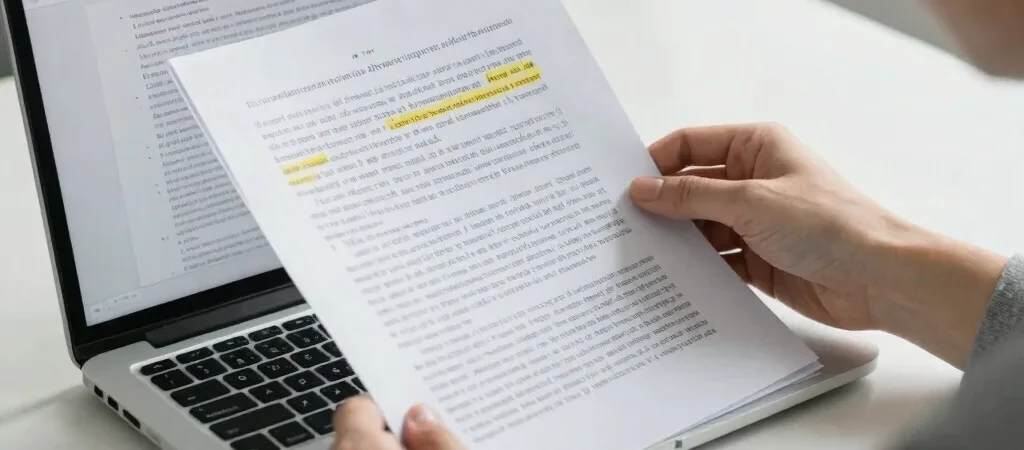
An AI response can sound settled even when the question is not. That matters when you are using it to explain a policy, prepare a class handout, or make a decision at work. Treat the answer as a draft to investigate, not as evidence by itself.
Separate claims from wording
Read the response once for its main claims and once for details that could change the meaning: dates, quantities, names, exceptions, and words such as “always” or “required.” A polished paragraph can hide several claims that need different evidence. Write down the parts you would be uncomfortable repeating without checking.
Ask the tool to identify which statements need verification or to suggest search terms, but do not treat that follow-up as proof. An answer may include a citation or link that is outdated, misread, or unrelated to the claim. Open the source and confirm that it actually says what the response attributes to it.
Check the original source
For current rules, schedules, or product details, look for the official organization’s latest page or document. For a broader factual claim, compare reliable sources that have relevant expertise and explain their evidence. If sources disagree, preserve that uncertainty instead of asking the AI to choose a side for you.
Match review to the stakes
A brainstorming prompt for a personal project needs a lighter check than information that could affect someone’s health, finances, rights, or employment. In higher-stakes situations, use qualified human judgment and authoritative sources rather than relying on an AI-generated summary. If you cannot verify a claim, leave it out or say that you have not confirmed it.