
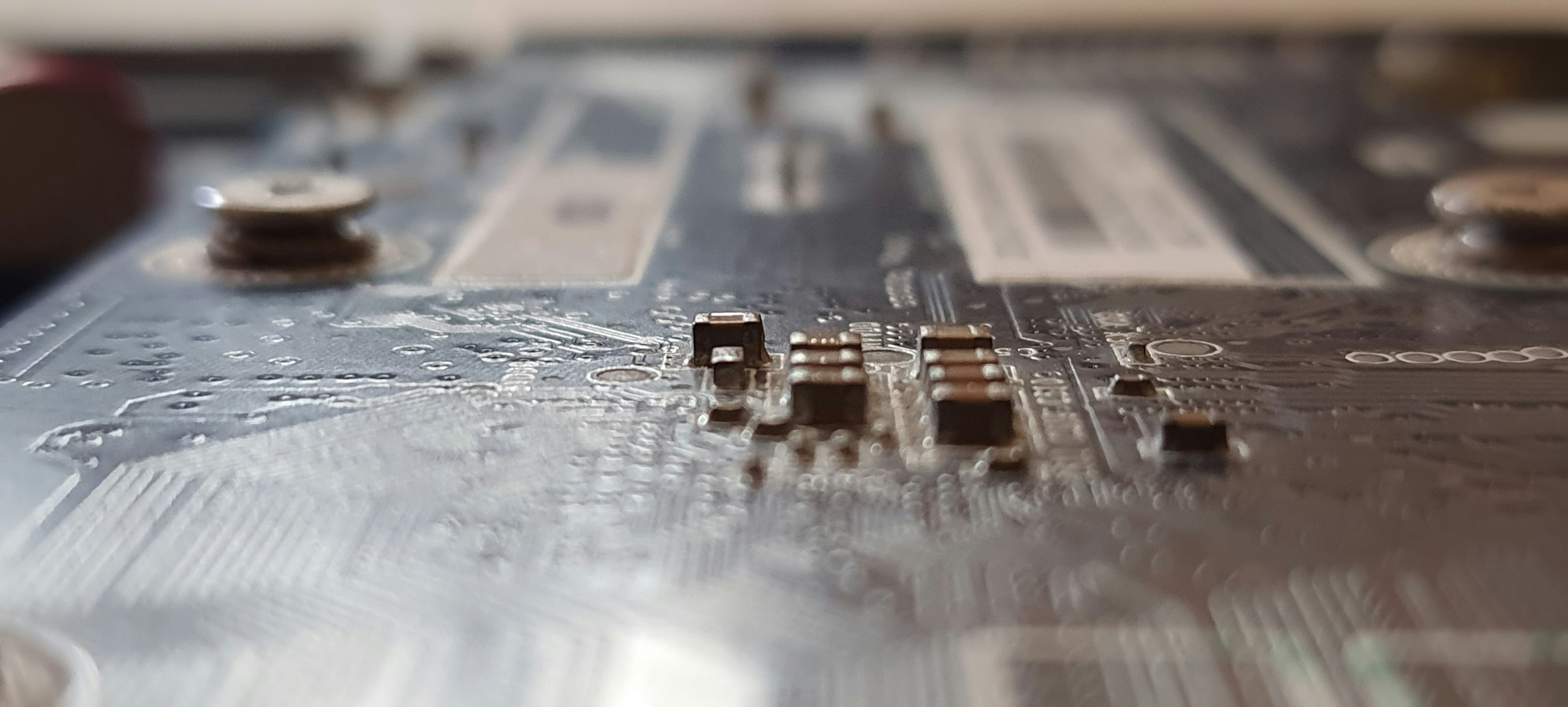
What Is a Capacitor?
If you have wondered “what are capacitor and what do they do,” the short answer is that a capacitor is an electronic component that stores electrical energy temporarily. It holds energy in an electric field between two conductive surfaces, called plates, separated by an insulating material known as a dielectric. The plates do not normally touch, but electrical charge can build up on them when voltage is applied.
A capacitor’s ability to store charge is called capacitance and is measured in farads. In everyday circuits, values are often much smaller, such as microfarads or picofarads. Capacitance depends on factors including the plates’ size and spacing and the dielectric material.
How Capacitors Work
When connected to a power source, a capacitor charges: one plate gathers positive charge while the other gathers negative charge. Once charged, it can release stored energy into a circuit. Unlike a battery, a typical capacitor stores energy for a relatively short time and is designed to charge and discharge quickly.
Capacitors also respond differently to changing and steady electrical signals. They can oppose sudden changes in voltage, while allowing many alternating signals to pass through a circuit. Their exact behavior depends on capacitance and the signal’s frequency.
What Capacitors Do in Devices
Capacitors have several practical jobs. They smooth voltage fluctuations in power supplies, helping provide steadier power to electronic components. They can filter unwanted electrical noise, couple signals between circuit stages, and help tune radio-frequency circuits. In some motors and lighting systems, capacitors assist with starting or operation.
You may find them in phones, televisions, computers, chargers, audio equipment, and household appliances. Different designs suit different tasks: ceramic capacitors are common for compact, general-purpose applications, while electrolytic types can provide larger capacitance in a small package. Each type has limits for voltage, temperature, and polarity.
Why They Matter
Though often small and inexpensive, capacitors help circuits manage energy and signals reliably. Understanding their basic role makes it easier to see how modern electronics start, filter power, and function smoothly. They are not energy sources; they store and release energy supplied by the surrounding circuit.