
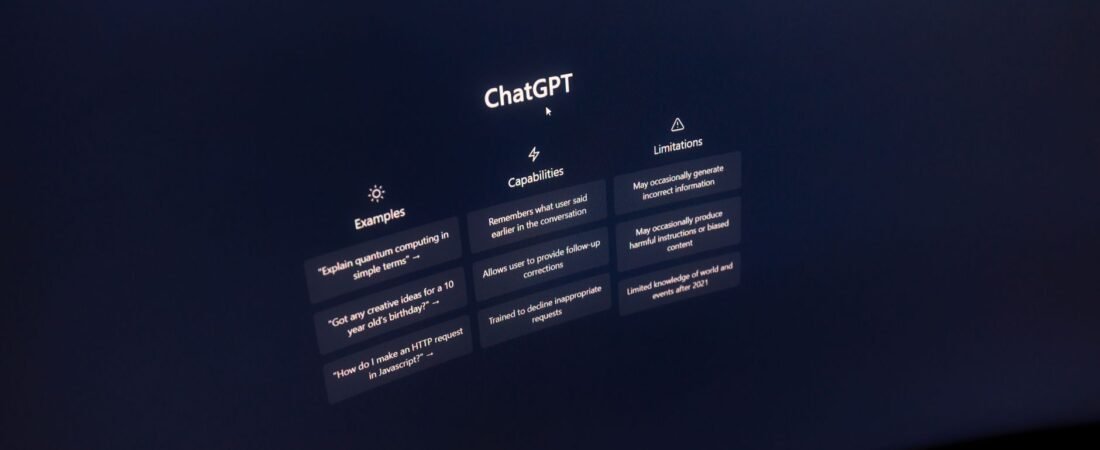
AI chatbots are great. They’re fast, they’re friendly, and they never get tired of your questions. But here’s the catch: they can say something totally wrong in the most confident voice you’ve ever heard.
That’s not a rare glitch. It happens to everyone who uses AI, and it even has a name: hallucination. In plain English, that means the AI made something up that sounds real.
The good news is that you don’t need to be an expert to catch most mistakes. You just need a few simple habits. Here’s how to check if an AI answer is true, step by step.
First, why does AI get things wrong?
AI chatbots don’t “know” facts the way people do. They predict which words are likely to come next, based on patterns they learned from huge amounts of text. Most of the time that works really well. Sometimes it doesn’t, and the AI fills a gap with something that sounds right but isn’t.
It’s most likely to slip up when:
- You ask about very recent news or things that changed lately
- You ask for exact numbers, dates, quotes or statistics
- You ask about small, niche or local topics with little written about them
- You ask for sources, links or studies, which it may invent
- Your question is vague, so it has to guess what you mean
Knowing this already helps. When your question falls into one of those buckets, slow down and double-check.
Step 1: Spot the claims that matter
You don’t need to fact-check every single word. Skim the answer and underline the parts that would cause real trouble if they were wrong, like:
- Numbers, prices, dates and percentages
- Names of people, companies, laws and studies
- Health, money, legal or safety advice
- Anything you plan to share, publish or act on
Check those first. A casual explanation of how photosynthesis works is lower risk than a dosage, a deadline or a legal rule.
Step 2: Search for the key fact yourself
This is the fastest check. Take the main claim and type it into a regular search engine. Then look at what comes back.
- Do trustworthy sites say the same thing?
- Does the date on those pages look recent?
- Does anything contradict the AI?
If you can’t find the claim anywhere, that’s a red flag.
Step 3: Ask the AI for its sources, then open them
It’s fine to ask, “Where did you get that? Give me sources I can open.” But don’t stop there. Click the links.
AI tools sometimes give links that don’t work, don’t exist, or don’t actually say what the AI claims. Some AI tools with web search show real sources automatically, which is helpful, but you should still open them and check that the page really supports the claim.
If a source can’t be opened or doesn’t match, don’t trust the claim.
Step 4: Ask the AI how sure it is
Try prompts like these:
How confident are you in this answer, and which parts are you least sure about?
What would I need to double-check in what you just told me?
Is there anything here that might be outdated or disputed?
These won’t make the AI perfect, but they often pull out useful warnings. Just remember that an AI’s confidence level isn’t proof. Treat it as a hint, not a guarantee.
Step 5: Ask the same question a different way
Rephrase your question and ask again, or ask a second AI tool. If two tools give you the same answer from different angles, that’s a good sign. If the answers don’t match, you’ve just found something worth looking into.
A quick trick: ask the AI to argue against its own answer. Something like, “What’s the strongest argument that your answer is wrong?” It often surfaces weak spots.
Step 6: Check numbers, quotes and math yourself
AI can slip on arithmetic, especially with long calculations. It can also paraphrase a quote and present it like a word-for-word quotation.
- Redo important calculations with a calculator or spreadsheet.
- For quotes, search the exact words in quotation marks and find the original.
- For statistics, find the original report instead of trusting the AI’s summary.
Step 7: Use a trusted source for high-stakes topics
For health, legal, tax, money or safety questions, use AI as a starting point only. Then confirm with an official source or a qualified professional, like a doctor, lawyer or accountant. A chatbot can help you understand the basics and prepare better questions, but it shouldn’t be the final word on something that could seriously affect you.
A 60-second checklist you can copy
Before you trust an AI answer, run through this:
- Which parts could cause trouble if they’re wrong?
- Did I search the main claim on my own?
- Did I open the sources and check they say what the AI says?
- Did I ask the AI what it’s least sure about?
- Did I double-check numbers and quotes?
- Is this high stakes? If yes, did I confirm with an expert or official source?
Common mistakes to avoid
- Believing it because it sounds smart. Confident writing isn’t the same as being correct.
- Trusting made-up sources. Always open the link or find the real paper.
- Copy-pasting AI text straight into your work. Review and verify first.
- Assuming the AI knows the latest news. Check dates, or use a tool that can search the web.
- Sharing private info while “fact-checking.” Don’t paste passwords, ID numbers or confidential documents into a chatbot.
Quick examples
Example 1: A made-up study. You ask an AI for a study that proves a claim. It gives you a title, authors and a year. You search for it and find nothing. Verdict: the AI invented it.
Example 2: An outdated fact. You ask about the rules for a visa or a tax deadline. The answer sounds right, but the official government page shows the rules changed. Verdict: use the official page.
Example 3: A wrong number. The AI says a product is 20% cheaper. You check the actual prices and it’s closer to 8%. Verdict: AI math and summaries need checking.
Frequently asked questions
Can I trust ChatGPT, Claude or Gemini? For brainstorming, explaining ideas and drafting, they’re very useful. For facts that matter, check them. No AI tool is right all the time.
Why does AI make things up? It generates likely-sounding text instead of looking up verified facts. When it doesn’t have a solid answer, it can fill in the gap with something that sounds convincing.
Is there an AI tool that never gets things wrong? No. Tools that cite web sources are often easier to verify, but they can still misread or misquote a source.
How can I tell if an AI source is real? Open it. Check that the page exists, that it’s from a trustworthy publisher, and that it really says what the AI claims.
Do I need to fact-check everything? No. Focus on facts that matter: numbers, names, dates, quotes, and anything involving health, money, law or safety.
Final thoughts
AI is a bit like a super-smart friend who sometimes confidently gets things wrong. You wouldn’t quit asking that friend for help, but you’d double-check the important stuff. Do the same with AI: use it to save time, then spend two minutes verifying what matters. That little habit protects you from most mistakes.
Got a funny or scary AI mistake story? Share it in the comments.